• 开源镜像
  • 开源沙龙
  • 媛宝
  • 猿帅
  • 注册
  • 登录
  • 息壤开源生活方式平台
  • 加入我们

开源日报

  • 开源日报第674期:《新的开始 ChromeAppHeroes》

    1 2 月, 2020
    开源日报 每天推荐一个 GitHub 优质开源项目和一篇精选英文科技或编程文章原文,坚持阅读《开源日报》,保持每日学习的好习惯。
    今日推荐开源项目:《新的开始 ChromeAppHeroes》
    今日推荐英文原文:《Why I Love Hotkeys》
    今日推荐开源项目:《新的开始 ChromeAppHeroes》传送门:GitHub链接
    推荐理由:休息了这么久闲都闲坏了,差不多是时候搞点新玩意了。这个项目推荐了不少 Chrome 浏览器的插件,附带中文版介绍方便使用,如果真的闲的没什么事情好做的话,捣鼓这些插件打发时间会是个好主意,借此机会回到日常的情报搜索和学习之中来吧,年假也是时候该结束了。
    今日推荐英文原文:《Why I Love Hotkeys》作者:Matt Cummings
    原文链接:https://medium.com/better-programming/why-i-love-hotkeys-9809b3b1bb29
    推荐理由:因为它用起来是真的很顺手,就像 Ctrl+C 一样

    Why I Love Hotkeys

    Keyboard shortcut all the things

    If you’ve ready any of my articles, you’ll know that I’m as thorough as can be. What you might not know is that while I strive for meticulousness, I try to make that process as streamlined as possible. This means that if I can get by without having to use the mouse to navigate, you can bet I will.

    This is why I love hotkeys!

    To be frank, hotkeys (known as shortcut keys or keyboard shortcuts to some) help you cut the crap when it comes to working with a program.

    Doing Everything Manually Is Cumbersome

    At my old job, I was responsible for executing various tasks to identify bacteria or viruses, seeing what drugs worked against said bacteria, calling the doctors for critical results, and much more. Medicine requires an extreme amount of intricate documentation showing what you did and the result of it — eventually forming a document that medical staff can refer to when caring for a patient. While we had test codes to speed things along, at first I wasn’t familiar with the program I used to record all this information.

    It was grueling. Clicking so many things and going back and forth between keyboard and mouse. It quickly got old. On any given day you had so much information to input, all while trying to keep ten other plates spinning.

    Now imagine being in a position where your work is primarily done at a desktop. Seconds-long processes add up to minutes and maybe even hours of wasted time in the workweek. We’re smart people — we’ve built many things to streamline our coding processes. So, one of the most basic things we can do is optimize our execution of those processes — and pretty much anything done on computers

    Faster Coding, Easier Navigation

    I use a Mac when I code, but a PC at my leisure. Luckily, hotkeys for many popular applications have similar syntax, so it’s not like you have to completely switch gears between the two.

    For example, I use Chrome as my browser on both computers. The hotkey to type something in the search bar is Cmd+Lon Mac, while it’s Ctrl+L on Windows. YouTube also has a shortcut I’m surprised more people don’t know about: hit / to jump to the search bar, instead of having to scroll up and potentially miss a click!

    On a more global level, there’s the ever-popular Cmd+Tab or Alt+Tab to navigate through open programs on the fly. It’s a huge timesaver and one I think everyone should know.

    Luckily for us, several text editors have a plethora of hotkeys to work with — even more, when considering extensions. It’s a big reason I use Visual Studio Code — there are so many intuitive things you can do with it without having to think twice. If I need to move a line of code up or down — which happens more than you’d think — I can do that with a simple Alt+↑ or Alt+↓. Using Ctrl+` lets me easily open and close the built-in CLI interface and Cmd+? is a standard in commenting and uncommenting code. There’s so much more to find than just everyone’s favorite copy-paste shortcuts.

    I’m not here to list off all the hotkeys VSCode has to offer. The reason I listed as many as I did was to show their ubiquitousness in computer applications. You don’t have to know every last one — in fact, some are more trouble than they’re worth (if I have to hit Cmd,Alt,Ctrl + some other key that’s a waste of my time and finger dexterity — I might as go and play the piano at that point!)

    However, in this day and age where technology is more intuitive than ever, you should familiarize yourself with them. Many programs like VSCode, Slack, and Discord have easy-to-find documentation listing all the shortcuts you could ever ask for.

    Work Smarter

    Eventually, I got the hang of the documentation program and its shortcuts, shaving precious minutes off my reporting ritual. I also felt more confident with the program and how it functioned, gaining some perspective on its logic.

    I love this feeling of mastery, it’s like a drug. Once you have that sort of control over a program, it’s immensely satisfying. It’s almost like playing the piano: You hit a key and a note is produced — if you’re talented at it there are parts of the song you don’t even have to think about. While I still had to pay close attention to the content I was reporting, it was a huge boon to just hit a couple of keys and start, versus the old way of navigating through menus and submenus.

    This same thing applies to any program. By using hotkeys, you’re not only working faster, but you’re also working smarter. By choosing to incorporate their use into your daily routine, you can experiment with things that work. If they don’t work, you can undo it at the press of Ctrl+Z . You can show others that you know your way around the program and that you aren’t content with doing the bare minimum.

    Like any other tool, it’s good to know the short and long way of doing things. Hotkeys are great to use when you understand the basics of an application and are ready to use them on the fly. They also lend themselves to sprints in an agile work environment, where every minute counts.

    You don’t have to learn all of them right away — try and focus on the major ones and ask what people around you like. It’s a great way to see how others work and learn what works best for your style.

    As always, have fun, and happy coding!
    下载开源日报APP:https://opensourcedaily.org/2579/
    加入我们:https://opensourcedaily.org/about/join/
    关注我们:https://opensourcedaily.org/about/love/
  • 开源日报第673期:《拖放 react-beautiful-dnd》

    21 1 月, 2020
    开源日报 每天推荐一个 GitHub 优质开源项目和一篇精选英文科技或编程文章原文,坚持阅读《开源日报》,保持每日学习的好习惯。
    今日推荐开源项目:《拖放 react-beautiful-dnd》
    今日推荐英文原文:《A Day in the Life of an Engineering Leader》
    顺带一提从今天开始到 2 月 1 日之前都放假哦,都去准备准备过个好年吧。

    今日推荐开源项目:《拖放 react-beautiful-dnd》传送门:GitHub链接
    推荐理由:如果要想为页面加入更好的与用户互动的元素,增加可拖放的部分就是一个不错的想法。这个项目是 React 的可拖放列表组件库,drag and drop 简称为 dnd,不过和隔壁那个用途更广的 react-dnd 不同,这个组件是专为列表形式的元素排列提供拖放的特化型组件,在列表上有着更好的表现。

    今日推荐英文原文:《A Day in the Life of an Engineering Leader》作者:Isabel Nyo
    原文链接:https://medium.com/better-programming/a-day-in-the-life-of-an-engineering-leader-532eba36b721
    推荐理由:PM 的一天

    A Day in the Life of an Engineering Leader

    What it could look like when you move out of day-to-day programming

    I am currently working as a software development manager at an enterprise software company in Sydney, Australia. My company develops products for agile teams consisting of software developers, product designers, product managers, and the likes.

    Similarly, my work involves working with agile teams. But because I am not an individual contributor nor a first-line manager, I am not directly part of an agile delivery team.

    A large part of my day involves collaborating with various people from multiple disciplines, from engineering, product, recruiting, marketing, program management, support, etc., in one-to-one or one-to-many settings, what we call “meetings”.

    It’s less about day-to-day operations but more about business strategy, long-term goals, growth, culture, and the likes.

    A Day in the Life of an Engineering Leader

    Let me share with you a day in the life of an engineering leader.

    Photo by Ekaterina Kasimova on Unsplash

    8:30am-9:00am

    I call this my quiet period to concentrate, set intention, and get on top of important things for the day.

    I have breakfast at my desk, look at my to-do list, decide what I’ll try to accomplish by the end of the day, and catch up on the status of various projects and people matters.

    Sometimes, I have a good hour for this, but sometimes, I only have 15 minutes.

    If I do have an early morning meeting or interview with someone from another part of the world, say at 8:00am, I try to get into the office early so that I can do my morning routine.

    9:00am-10:00am

    I joined a Product Brain Trust (PBT) for one of my teams with our leadership triad, which consists of head of engineering, head of design, and head of product.

    I usually listen in to try and understand their point-of-views. I am already aware of what my teams are working on but this is usually the first time for the leadership triad to hear and see about the ideas, concepts, and sometimes, low-fidelity designs.

    I also take notes of important discussions to build on my knowledge about our product and customers and to share this knowledge back with my teams. An hour of PBT usually goes by quickly.

    10:00am-10:30am

    Most teams do daily standups between 10:00am and 10:30am as it’s the time when most people start their days, whether they work in the office or remotely.

    If I have a special project that I am managing with a temporary team like a tiger team, I’d join that standup. If I was looking after a delivery team because their engineer manager is away, I’d join their standup as necessary.

    My principle here is that if I could add some value by being there, whether to provide insights, guidance, support, feedback, I’d be there.

    Otherwise, I believe teams should be self-organizing and autonomous enough to facilitate their own standup.

    Photo by CoWomen on Unsplash

    10:30am-12:00pm

    I usually have small focused meetings during this time. Some of them are 1:1s, others involve 3-4 people.

    My 1:1s are not just with my direct reports and my immediate manager. I also have 1:1s with people from various disciplines like support, marketing, product management, program management, talent acquisition, design, and so on.

    Sometimes, these meetings turn into three people; for example, a customer interview including myself, someone from product or design, and a customer or a potential customer of our product.

    12:00pm-1:00pm

    I’ve blocked out time on my calendar for this period because it’s my balcony time. I usually have a quick 15-20 minute lunch and then use the rest of the time to get out of the building, go for a walk around the block, listen to a podcast, or just observe the world.

    I’m lucky that my office is in the Sydney CBD; which means I sometimes go for a walk around the Darling Harbor or the famous Sydney Opera House.

    Sometimes, I just watch tourists enjoying the city and street performers doing their magic. It really helps me put things in perspective.

    Photo by Susan Kuriakose on Unsplash

    1:00pm-2:30pm

    I’m back in the office and during this time, I usually have a leadership or values interview with a candidate. My company has been growing aggressively since I joined and thus, we have numerous roles open at any one time.

    As a leader, it’s one of my responsibilities to recruit great talent to the company. I do two to three interviews a week, sometimes more if there’s a need.

    I try to be a good interviewer by really getting to know the interviewee, listening actively, asking clarifying questions because I believe that it’s a service you provide.

    I am not going to lie, sometimes I find that the questions and answers get a bit old, but then there will be a candidate who would surprise me with something and make me feel that there’s always something new to learn from interviews.

    2:30pm-3:30pm

    After leadership or values interviews, I have another set of 1:1s. For example, a catch-up with an internal recruiter for an open role on one of my teams.

    I also have 1:1s with my direct reports who are engineering managers to give and receive feedback, get aligned on projects, discuss their growth, or with direct reports who are principal engineers to give and receive feedback, spar on technical architecture, and technical vision.

    Lastly, I have 1:1s with my manager to discuss products, processes, and people and, yes, you guessed it, to give and receive feedback. They don’t all happen on the same day, during the same session though, in case you were wondering.

    Photo by Joshua Ness on Unsplash

    4:00pm-4:30pm

    Some days, I’ll have quiet time to catch up on Slack messages, other days, I’ll join a Scrum of Scrums meeting, techOps meeting, or other department-wide meetings.

    I leave the office by 4:45pm as I need to pick up my daughter from school and commuting takes at least an hour.

    Photo by Sebastien Gabriel on Unsplash

    Being a Manager

    Now, you might be asking, is being a manager all about meetings? Of course not, meetings alone aren’t enough in delivering outcomes. The above is an example of a few of my days during a week.

    I usually theme my day and organize my calendar carefully so I have at least one day during the week where I could have a block of time, i.e.: more than two hours, to fit in some strategy or execution work that’s not attending or facilitating meetings.

    Sometimes, I can’t help but fit in two or three hours of work time after dinner with my family and homework with my daughter. But I try to not make it an everyday occurrence because I don’t want to be getting burnt out.

    I also have other creative outlets and side-projects that I like to devote my time to. More often than not, they are indirectly related to my full-time job as a senior engineering leader.

    For example, when I was asked to be on the panel for diversity and inclusion at work, I didn’t have to research much because I had already been doing research for my article previously.

    Or when I offer mentoring and career coaching at work, I leverage my knowledge and experience obtained as a career coach outside my full-time work.

    womenintechnology.threadless.com

    What I’ve Learned

    One of the biggest learnings throughout my career as a manager and leader is that you have to be flexible and you have to be able to adapt to changing requirements of the people and business.

    A lot of the things are often unknown. When you are a developer working on projects, you know what you’re going to be working on next week or even next month.

    Your ability to deliver is on your capabilities, most of the time. When you’re a manager, things could change more frequently, you are no longer in control of most of the things around you.

    You can’t mandate market, seasonality, or people’s desires. The role of a manager is also to shield their team from constant changes and noise from the outside so they can focus on delivering value for customers, whether they are new features or improvement or bug fixes to existing features.

    Photo by Kelly Sikkema on Unsplash

    Never a Dull Day

    A day in my life as an engineering leader may look the same from the outside over a few months, but I can assure you that when you dig deep, each day could be completely different.

    For example, on day one, we might be discussing a new market we are going to go after in a few months but on day 15, we might be discussing an updated organization structure to support career growth for people.

    Then, on day 30, we might be discussing performance reviews that we will be having in a few weeks and how to keep the process fair and consistent across the organization.

    My days, weeks, and months vary and they are often not predictable. I have to say there is never a dull day as an engineering leader.

    Unpredictable as it may be, and sometimes it feels like you’re not contributing anything worth mentioning because the feedback loop is so slow, I know from experience that the job of an engineering manager can be truly impactful through processes, products, and most importantly, people.

    Photo by Dan Meyers on Unsplash

    下载开源日报APP:https://opensourcedaily.org/2579/
    加入我们:https://opensourcedaily.org/about/join/
    关注我们:https://opensourcedaily.org/about/love/
  • 开源日报第672期:《下载管理器:Motrix》

    20 1 月, 2020
    开源日报 每天推荐一个 GitHub 优质开源项目和一篇精选英文科技或编程文章原文,坚持阅读《开源日报》,保持每日学习的好习惯。
    今日推荐开源项目:《下载管理器:Motrix》
    今日推荐英文原文:《7 things I learned from starting an open source project》

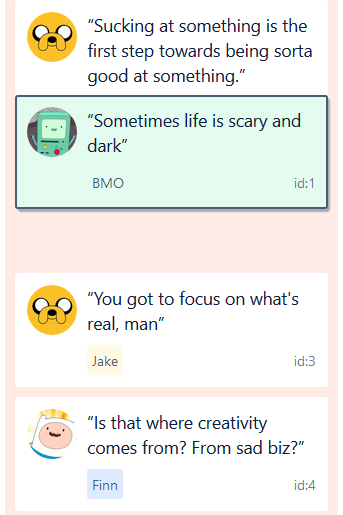
    今日推荐开源项目:《下载管理器:Motrix》传送门:GitHub链接
    推荐理由:Motrix是功能齐全的下载管理器,支持下载HTTP,FTP,BitTorrent,Magnet,百度网盘等。 Motrix具有简洁易用的界面,上手简单。
    今日推荐英文原文:《7 things I learned from starting an open source project》作者:Mike Bursell
    原文链接:https://opensource.com/article/20/1/open-source-project
    推荐理由:

    7 things I learned from starting an open source project

    I’m currently involved—heavily involved—in Enarx, an open source (of course!) project to support running sensitive workloads on untrusted hosts. I’ve had involvement in various open source projects over the years, but this is the first for which I’m one of the founders. We’re at the stage now where we’ve got a fair amount of code, quite a lot of documentation, a logo, and (important!) stickers. The project will hopefully be included in a Linux Foundation group—the Confidential Computing Consortium—so things are going very well indeed.

    I thought it might be useful to reflect on some of the things we did to get things going. To be clear, Enarx is a particular type of project, one that we believe has commercial and enterprise applications. It’s also not mature yet, and we’ll have hurdles and challenges along the way. What’s more, the route we’ve taken won’t be right for all projects, but hopefully, there’s enough here to give a few pointers to other projects or people considering starting one up.

    The first thing I’d say is that there’s lots of help to be had out there. I’d start with Opensource.com, where you’ll find lots of guidance. I’ll follow up by saying that, however much of it you follow, you’ll still get things wrong. That said, here’s my list of things to consider when starting an open source project.

    1. Aim for critical mass

    I’m very lucky to work at the amazing Red Hat, where everything we do is open source and where we take open source and community very seriously. I’ve heard it called a “critical mass” company—in order to get something taken seriously, you need to get enough people interested in it that it’s difficult to ignore. Enarx’s two co-founders—Nathaniel McCallum and I—are both very enthusiastic about the project and have spent a lot of time gaining sponsors within the organisation (you know who you are, and we thank you—we also know we haven’t done a good enough job with you on all occasions!) and “selling” it to engineers to get them interested enough that it was difficult to stop.

    Some projects just bobble along with one or two contributors, but if you want to attract people and attention, getting a good set of people together who can get momentum going is a must.

    2. Create a demo

    If you want to get people involved, a demo is great. It doesn’t necessarily need to be polished, but it does need to show that what you’re doing is possible and that you know what you’re doing. For early demos, you may be talking about command-line output; that’s fine if what you’re providing isn’t a user interface (UI) product. Being able to talk about what you’re doing and convey both your passion and the importance of the project is a great boon. People like to be able to see or experience something, and it’s much easier to communicate your enthusiasm if they have something real that expresses that.

    3. Choose a license

    Once you have code and it’s open source, you want other people to be able to contribute. This may seem like an unimportant step, but selecting an appropriate open source licence1 will allow other people to contribute on well-understood and defined terms, making it easier for them to be involved—and for the organisations for which they work to allow them to do so.

    4. Get documentation

    You might think that developer documentation is the most important to get out there—otherwise, how will other people get involved in coding? I disagree, at least to start with. For a small project, you can probably scale to a few more people just by explaining what the code does, what it should do, and what’s missing. However, if there’s no documentation available to explain what it’s for and how it’s going to help people, then why would anyone bother even looking at it?

    This doesn’t need to be polished marketing copy, and it doesn’t need to be serious, but it does need to convey to people why they should care. It’s also going to help you with the first point I mentioned, attaining critical mass, as being able to point to documentation, use cases, and the rest will help convince people that you’ve thought through the point of your project. We’ve used a GitHub wiki as our main documentation hub, and we try to update it with new information as we generate it. This is an area, to be clear, where we could do better. But at least we know that.

    5. Be visible

    People aren’t going to find out about you unless you’re visible. We were incredibly lucky in that the Confidential Computing Consortium was formed just as we were beginning to get to a level of critical mass, and we immediately had a platform to increase our exposure. We have a Twitter account, I publish articles on my blog, and at Opensource.com, we’ve been lucky enough to have the chance to publish on Red Hat’s now + Next blog, I’ve done interviews with the press, and we speak at conferences wherever and whenever we can.

    We’re very lucky to have these opportunities, and it’s clear that not all these approaches are appropriate for all projects, but make use of what you can: the more that people know about you, the more people can contribute.

    6. Be welcoming

    Let’s assume that people have found out about you: what’s next? Well, they’re hopefully going to want to get involved. If they don’t feel welcome, then any involvement they have will taper off quickly. Yes, you need documentation (and, after a while, technical documentation, no matter what I said above), but you also need ways for contributors to talk to you and for them to feel that they are valued. We have Gitter channels, and our daily standups are open to anyone who wants to join. Recently, someone opened an issue on our issues database, and during the conversation on that thread, it transpired that our daily standup time doesn’t work for them (given their time zone), so we’re going to ensure that at least once a week it does, and we’ve assured them that we’ll accommodate them.

    7. Work with people you like

    I really, really enjoy meeting and working with the members of the Enarx project team. We get on well, we joke, we laugh, and we share a common aim: to make Enarx successful. I’m a firm believer in doing things you enjoy, where possible. Particularly in the early stages of a project, you need people who are enthusiastic and enjoy working closely together—even if they’re geographically separated by thousands of kilometres.2 If they don’t get on, there’s a decent chance that your and their enthusiasm for the project will falter, that the momentum will be lost, and that the project will end up failing. You won’t always get the chance to choose those with whom you work, but if you can, then choose people you like and get on with.

    Conclusion: People

    I didn’t realise it when I started writing this article, but it’s not really about project mechanics at all: it’s about people. If you read back, you’ll find the importance of people visible in every tip, even the one about choosing a license. Open source projects aren’t really about code: they’re about people, how they share, how they work together, and how they interact.

    I’m certain that your experience of open source projects will vary, and I’d be very surprised if everyone agrees about the top seven things you should do for project success. Arguably, Enarx isn’t a success yet, and I shouldn’t be giving advice at this stage of our maturity. But when I think back to all of the open source projects that I can think of that are successful, people feature strongly, and I don’t think that’s a surprise at all.


    下载开源日报APP:https://opensourcedaily.org/2579/
    加入我们:https://opensourcedaily.org/about/join/
    关注我们:https://opensourcedaily.org/about/love/

  • 开源日报第671期:《干啥都用脚本 hacker-scripts》

    19 1 月, 2020
    开源日报 每天推荐一个 GitHub 优质开源项目和一篇精选英文科技或编程文章原文,坚持阅读《开源日报》,保持每日学习的好习惯。
    今日推荐开源项目:《干啥都用脚本 hacker-scripts》
    今日推荐英文原文:《The 2020s Will Be the Decade of the Bioeconomy》

    今日推荐开源项目:《干啥都用脚本 hacker-scripts》传送门:GitHub链接
    推荐理由:这个项目来自一个真实的故事,在一个工程师的生活中,如果任何事情需要90秒以上的时间,他就会选择用脚本解决。根据时间自动发送上班迟到的短信并随机选择理由,扫描邮件并通过查找关键字回复,甚至是自动制作咖啡并在24秒后倒入杯中,而这段时间正好是他走到咖啡机的时间…… 说不定这是对我们的启发呢?
    今日推荐英文原文:《The 2020s Will Be the Decade of the Bioeconomy》作者: Alexander Titus
    原文链接:https://onezero.medium.com/the-2020s-will-be-the-decade-of-the-bioeconomy-b722420c6bff
    推荐理由:你可能你已经看到过最近出现的基因检测的广告了吧,随着生物科技的发展,未来十年被作者称为生物经济的十年,更被美国国防部生物技术部副部长称为下一次科学革命。

    The 2020s Will Be the Decade of the Bioeconomy

    The assistant director for biotechnology at the Defense Department on why the U.S. needs to go all-in on the next scientific revolution


    (Photo: MediaNews Group/The Mercury News/Getty Images)

    Alexander Titus currently serves as the assistant director for biotechnology in the Office of the Under Secretary of Defense for Research and Engineering with the U.S. Department of Defense and was previously a management consultant at McKinsey & Company and a data scientist at Amazon and In-Q-Tel. The views expressed here are his alone and do not represent those of the DoD or the U.S. Government.

    I spend my time focused on leveraging biotechnology for the public good, and I’m ecstatic about what we’ll see in the coming years. Biotechnology is advancing at an unprecedented rate, and engineered biology, commonly referred to as synthetic biology (SynBio), is taking the world by storm. The past 12 months have seen a major focus on the bioeconomy—the economy based on biology and biotechnology—which promises to be integral to the next decade of growth and opportunity. It’s hard to imagine that artificial intelligence has only been in resurgence since 2012 — less than 10 years. But just as A.I. impacts the digital world, biotechnology impacts the physical world, and over the next decade, we’ll see innovations that rival, or even outpace, A.I.

    Biotechnology in the bioeconomy


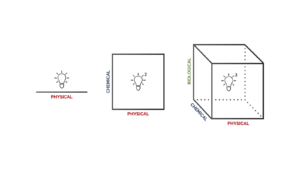
    For thousands of years, we’ve had physical solutions to our problems. I have a heavy rock that needs to get from point A to point B, so I push it, pull it, or roll it. Then, during the industrial revolution, we developed industrial synthetic chemistry. For the last 100 to 150 years, we have combined physical and chemical technologies to accelerate the economy and the quality of life for people around the world.

    (Biotechnology adds an entirely new dimension of technology development in the bioeconomy. Courtesy of the author)

    Now we’re in a new industrial revolution, bringing the bioeconomy to the forefront of technology and economic growth, where we’re combining biotechnology with chemical and physical technologies to revolutionize the world.

    Biotechnology opportunity extends beyond health care and agriculture


    The U.S. has a robust bioeconomy in health care and agriculture and is a global leader in emerging biotechnologies. It’s these emerging applications in engineered biology, however, that will drive the next wave of growth in the bioeconomy over the next decade. In 2019 alone, we saw scientists and engineers create new therapies for incurable infections and ways to make plants grow in soil that should be too salty. In recent years, the private sector and the government have also partnered to advance regenerative manufacturing and biopharmaceutical development.

    (MIT scientists have figured out how to make plants grow in soil that should be too salty. Photo: Fast Company)

    Innovations like these in the bioeconomy will increasingly be driven by our ability to leverage synthetic biology and other forms of engineered biology to change the paradigm of how we think about the life sciences.

    National interest in the bioeconomy


    While biotechnology and bioeconomy have enjoyed major growth over the past decade, in the last 12 months, the bioeconomy has become a central topic in academia, industry, and government. Recognizing the strategic advantage that leadership in biotechnology represents, 2019 saw the launch of the U.S. Promote and Protect the Bioeconomy initiative as well as the Department of Defense establishing biotechnology as an enterprise modernization priority (BIO).

    In late 2019 the House passed the Engineering Biology Research and Development Act of 2019 and moved it into the Senate for consideration, and the DoD released a notice of intent to stand up a synthetic biology manufacturing innovation institute, commonly referred to as SynBio MII. The SynBio MII, like the two partner institutes already running, ARMI and NIIMBL, will accelerate the U.S. biomanufacturing industry in support of the bioeconomy.

    It’s the combination of a strong private sector, and federal government funding for research and development in this sector, that will drive the next decade of bioeconomy growth.

    Ethical, legal, and societal implications (ELSI) of biotechnology


    As exciting as new technology is, these advances rarely come without ethical and societal implications to misuse. In the last year, we’ve seen the overstep of biotechnology use with the Chinese and Russian application of human genome editing despite an international call for a moratorium on human genome editing. In addition, in the past year, the New York Times has reported extensively on China’s misuse of genetic information and artificial intelligence to target minority populations. And at the end of the decade, the Department of Defense warned its service members against using at-home DNA kits.

    Two lessons about biotechnology innovation


    Just as graphical processing units revolutionized our ability to do A.I. at scale, the next decade will see unprecedented advances in biomanufacturing and our ability to produce new products at scale in a global market. We will advance in our ability to manufacture and process large quantities of new products in faster and faster development cycles.

    There is no doubt other countries see biotechnology as the future of global leadership. China’s “Made in China 2025” has put biotechnology at the heart of the initiative.

    Biotech 2020 and the decade of the bioeconomy


    I believe that the U.S. needs policymakers to pass legislation to bolster the bioeconomy and incentivize the growth of companies in the industry. This means the U.S. needs new policies in economics, education, and workforce development. Industry leaders need to understand that the future of their company depends on their ability to adapt and capitalize on the future bioeconomy. The U.S. needs scientists and engineers to bring hard technical skills to the field and finish the job of making biology a true engineering discipline. Influencers, celebrities, and those in the spotlight must voice their support in revolutionizing the world. But most importantly, the U.S. consumer needs to vote with their dollars and show that biotechnology is not just an interesting advance in technology, but mandatory to our future and our vitality.

    Originally published at https://alexandertitus.com.


    下载开源日报APP:https://opensourcedaily.org/2579/
    加入我们:https://opensourcedaily.org/about/join/
    关注我们:https://opensourcedaily.org/about/love/

←上一页
1 … 90 91 92 93 94 … 262
下一页→

Proudly powered by WordPress