• 开源镜像
  • 开源沙龙
  • 媛宝
  • 猿帅
  • 注册
  • 登录
  • 息壤开源生活方式平台
  • 加入我们

开源日报

  • 开源日报第746期:《保护发际线 git-bug》

    13 4 月, 2020
    开源日报 每天推荐一个 GitHub 优质开源项目和一篇精选英文科技或编程文章原文,坚持阅读《开源日报》,保持每日学习的好习惯。
    今日推荐开源项目:《保护发际线 git-bug》
    今日推荐英文原文:《Why Is Working From Home During a Lockdown Really Exhausting?》
    今日推荐开源项目:传送门:GitHub链接
    推荐理由:Git-bug 是内嵌于 Git 的分布式 bug 跟踪器,尽可能避免“编程一小时,找bug一天”的局面,但是目前还不是十分稳定,期待更加完善。
    今日推荐英文原文:《Why Is Working From Home During a Lockdown Really Exhausting?》作者:Roberto Hernandez
    原文链接:https://medium.com/better-programming/why-is-working-from-home-during-a-lockdown-really-exhausting-af5eee8ee99bWhy Is Working From Home During a Lockdown Really Exhausting?
    推荐理由:一个家里蹲程序员的日常

    Why Is Working From Home During a Lockdown Really Exhausting?

    We must take care of ourselves and embrace this big change

    (By the author)
    Working from home for one or two days consecutively without getting out is super easy, it sounds more than exciting, right?

    However, now, due to the COVID-19 pandemic, some of us have been asked to remain at home for more than a month or perhaps even longer, with serious restrictions on going out.

    I have almost reached one month by now, working from home without getting out at all. This means I haven’t gone out anywhere. So, now, I am feeling the effect of this.

    I am taking care of myself by practicing different techniques and best practices to avoid stress, burn out, anxiety and all of that. Unfortunately, I can’t help feeling exhausted at the end of the day.

    Why is it that working from home during a lockdown is really exhausting? The answer to this is that it is due to different factors and changes that we didn’t have before. Let’s review them in this post.

    Work From Home With Kids All Day

    Every single time I stand up from my desk and get out of my makeshift office to grab a glass of water or go to the bathroom, a little voice pipes up.

    My three-year-old son asks me: “Dad, did you finish your work, can we play for a while, please? His sweet voice strikes me hard as I have to continue my responsibilities.

    I am completely sure he is also experiencing stress during this lockdown. It is impossible to avoid it and I tell him: “Sorry my friend, I am still working. We will dance at the end of the day as we usually do, do you agree?”

    He looks at me with a sad face and he rapidly goes to mom’s arms to feel supported after my negative response.

    During the day, he is playing with his aunts and mom. However, he always finds a chance to bang on the door of my temporary office. Or, sometimes, when he is watching his favorite TV cartoons series, he opens the door to invite me to see the scenes that we usually play out together when I am not working.

    Furthermore, sometimes it is hard to hear clearly when we attend meetings because he is crying out loudly. Because he doesn’t want to take his nap or because he doesn’t want to do his homework.

    Anyway, there is an almighty noise around me. This doesn’t usually happen if he is at school. I think working from home is different if your kids are not at school. It’s a real battle to handle.

    Wasted Time at the Office

    I have to confess it. I have felt guilty when I am not doing things while I am working from home. However, I am not wasting time at all.

    I am doing some valuable and meaningful things like researching new programming courses, hugging my son and wife for a while, and having short talks with my brother in law.

    Now, I’ve realized that time works differently at home than in the office. Just to give an example. At the office, you waste time visiting one of your closest coworkers or when you go to the common areas to get a cup of coffee and have a short conversation with one of the coworkers you come across.

    Did you do that at least one time while you were at the office? Have you done that?

    There are more activities at the office that are truly easy to mention when we’re expressing more ways to waste time.

    So, stop feeling guilty about that when you are at home spending a few minutes searching for any products you would like to buy on Amazon or just reading the updates on Twitter from your president about the COVID-19 situation in your country, city, or the latest news that goes around the world.

    Isolation Will Take a Toll on You

    “We are not isolated beings, we are socials beings instead”

    No doubt, working a full day without going out takes a toll on us. I am feeling more tired at the end of the journey than before the COVID-19 pandemic arrived in our lives. It took control of our schedules and, therefore, our lives.

    I don’t know if this is happening to you, but in my case, when I finish my workday, I feel more tired than usual. And this is the result of not going out or having our usual social relationships.

    Interruptions and Chaos

    Certainly, working from home used to be normal to a certain point, of course, before this pandemic.

    We always had interruptions during the day but not with the same intensity as we do now. A quarantine forces everyone to stay at home so your odds of interruptions might be multiplied.

    It could be my son, wife, or mother-in-law who is asking me something about the truth of some info on social networks related to COVID-19 or just to get new information about that.

    New Coworkers Are More Demanding

    There is a huge difference between your coworkers at the office and your new coworkers at home. Your wife, mother in law, kids, aunts, or another person who is at home the whole day always finds a way to request something.

    It’s understandable, they are claiming a little space and time during this hard time as well.

    There No Clear Transition Between Work Life and Home Life

    We should get up and start our workday the same way we do when we are at the office. If we get in at 9:00 am, we should be ready at that time. So, this means we would have had a shower, had breakfast, and everything we need on our desk to get things done.

    During lunchtime, what I do is sit at the dining table with my loved ones and eat lunch. This is a good idea to have a full break as you usually do at the office. I do. At least I have lunch and dinner with them because when I get up early, they are still dreaming and cozily sleeping.

    If we don’t make a clear transition between work life and home life sooner rather than later, it will take a toll on us.

    Developing Patience and Understanding

    During the day, we might come up with some sensitive conversations with our relatives in one way or another.

    For instance, nobody wants to stay at home. There is always one of our family members who doesn’t care or doesn’t take the lockdown seriously and they decide to go out. This certainly causes conflict or bad feelings among family members.

    Handling those types of things in this crisis is another burden to your day. It will affect you at the end of the day or week. Whether you want it or not.

    Thanks for reading! I hope this post turned out helpful for you.


    下载开源日报APP:https://opensourcedaily.org/2579/
    加入我们:https://opensourcedaily.org/about/join/
    关注我们:https://opensourcedaily.org/about/love/
  • 开源日报第745期:《程序员如何优雅的挣零花钱: howto-make-more-money》

    12 4 月, 2020
    开源日报 每天推荐一个 GitHub 优质开源项目和一篇精选英文科技或编程文章原文,坚持阅读《开源日报》,保持每日学习的好习惯。
    今日推荐开源项目:《程序员如何优雅的挣零花钱: howto-make-more-money》
    今日推荐英文原文:《Is UML Esperanto for Programmers?》

    今日推荐开源项目:《程序员如何优雅的挣零花钱: howto-make-more-money》传送门:GitHub链接
    推荐理由:在当今社会, 程序员学习并掌握大量的技能, 除了正常的参加工作, 程序员又有什么方式将自己掌握的技术进行变现呢?这本书将讲述程序员如何优雅的赚零花钱.
    今日推荐英文原文:《Is UML Esperanto for Programmers?》作者:codemanship
    原文链接:https://codemanship.wordpress.com/2020/04/06/is-uml-esperanto-for-programmers/
    推荐理由:统一建模语言 (Unified Modeling Language,UML) 是一种为面向对象系统的产品进行说明、可视化和编制文档的一种标准语言,是非专利的第三代建模和规约语言。本文将探讨UML的相关历史, 以及UML在现代环境中的应用.

    Is UML Esperanto for Programmers?

    Back in a previous life, when I wore the shiny cape and the big pointy hat of a software architect, I thought the Unified Modeling Language was a pretty big deal. So much, in fact, that for quite a few years, I taught it.

    In 2000, there was demand for that sort of thing. But by 2006 demand for UML training – and for UML on teams – had faded away to pretty much nothing. I rarely see it these days, on whiteboards or on developer machines. I occasionally see the odd class diagram or sequence diagram, often in a book. I occasionally draw the odd class diagram or sequence diagram myself – maybe a handful of times a year, when the need arises to make a point that such diagrams are well-suited to explaining.

    UML is just one among many visualisation tools in my paint box. I use Venn diagrams when I want to visualise complex rules, for example. I use tables a lot – to visualise how functions should respond to inputs, to visualise state transitions, and to visualise conditional logic (e.g., truth tables). But we fixated on just that one set of diagrams, until UML became synonymous with software visualisation.

    I’m a fan of pictures, you see. I’m a very visual thinker. But I’m aware that visual thinkers seem to be in a minority in computing. I often find myself being the only one in the room who gets it when they see a picture. Many programmers want to see code. So, on training courses now, I show them code, and then they get it.

    Although UML has withered away, its vestigial limb remains in the world of academia. A lot of universities teach it, and in significant depth. In Computer Science departments around the world, Executable UML is still very much a thing and students may spend a whole semester learning how to specify systems in UML.

    Then they graduate and rarely see UML again – certainly not Executable UML. The ones who continue to use it – and therefore not lose that skill – tend to be the ones who go on to teach it. Teaching keeps UML alive in the classroom long after it all but died in the office.

    My website parlezuml.com still gets a few thousand visitors every month, and the stats clearly show that the vast majority are coming from university domains. In industry, UML is as dead a language as Latin. It’s taught to people who may go on to teach it, and elements of it can be found in many spoken languages today. (There were a lot of good ideas in UML). But there’s no country I can go to where the population speak Latin.

    Possibly a more accurate comparison to UML, might be Esperanto. Like UML, Esperanto was created – I think perhaps, aside from Klingon, only one example of a completely artificial spoken language – in an attempt to unify people and get everyone “speaking the same language”. As noble a goal as that may be, the reality of Esperanto is that the people who can speak it today mostly speak it to teach it to people who may themselves go on to teach it. Esperanto lives in the classroom – my Granddad Ray taught it for many years – and at conferences for enthusiasts. There’s no country I can go to where the population speak it.

    And these days, I visit vanishingly few workplaces where I see UML being used in anger. It’s the Esperanto of software development.

    I guess my point is this: if I was studying to be an interpreter, I would perhaps consider it not to be a good use of my time to learn Esperanto in great depth. For sure, there may be useful transferable concepts, but would I need to be fluent in Esperanto to benefit from them?

    Likewise, is it really worth devoting a whole semester to teaching UML to students who may never see it again after they graduate? Do they need to be fluent in UML to learn its transferable lessons? Or would a few hours on class diagrams and sequence diagrams serve that purpose? Do we need to know the UML meta-meta-model to appreciate the difference between composition and aggregation, or inheritance and implementation?

    Do I need to understand UML stereotypes to explain the class structure of my Python program, or the component structure of my service-oriented architecture? Or would boxes and arrows suffice?

    If the goal of UML is to be understood (and to understand ourselves), then there are many ways beyond UML. How much of the 794-page UML 2.5.1 specification do I need to know to achieve that goal?

    And why have they still not added Venn diagrams, dammit?! (So useful!)

    So here’s my point: after 38 years programming – 28 of them for money – I know what skills I’ve found most essential to my work. Visualisation – drawing pictures – is definitely in that mix. But UML itself is a footnote. It beggars belief how many students graduate having devoted a lot of time to learning an almost-dead language but somehow didn’t find time to learn to write good unit tests or to use version control or to apply basic software design principles. (No, lecturers, comments are not a design principle.)

    Some may argue that such skills are practical, technology-specific and therefore vocational. I disagree. There’s JUnit. And then there’s unit testing. I apply the same ideas about test structure, about test code design, about test organisation and optimisation in RSpec, in Mocha, in xUnit.net etc.

    And UML is a technology. It’s an industry standard, maintained by an industry body. There are tools that apply – some more loosely than others – the standard, just like browsers apply W3C standards. Visual modeling with UML is every bit as vocational as unit testing with NUnit, or version control with Git. There’s an idea, and then that idea is applied with a technology.

    You may now start throwing the furniture around. Message ends.


    下载开源日报APP:https://opensourcedaily.org/2579/
    加入我们:https://opensourcedaily.org/about/join/
    关注我们:https://opensourcedaily.org/about/love/

  • 开源日报第744期:《技能树 web-skills》

    11 4 月, 2020
    开源日报 每天推荐一个 GitHub 优质开源项目和一篇精选英文科技或编程文章原文,坚持阅读《开源日报》,保持每日学习的好习惯。
    今日推荐开源项目:《技能树 web-skills》
    今日推荐英文原文:《How to Choose Your Next Side Project》

    今日推荐开源项目:《技能树 web-skills》传送门:GitHub链接
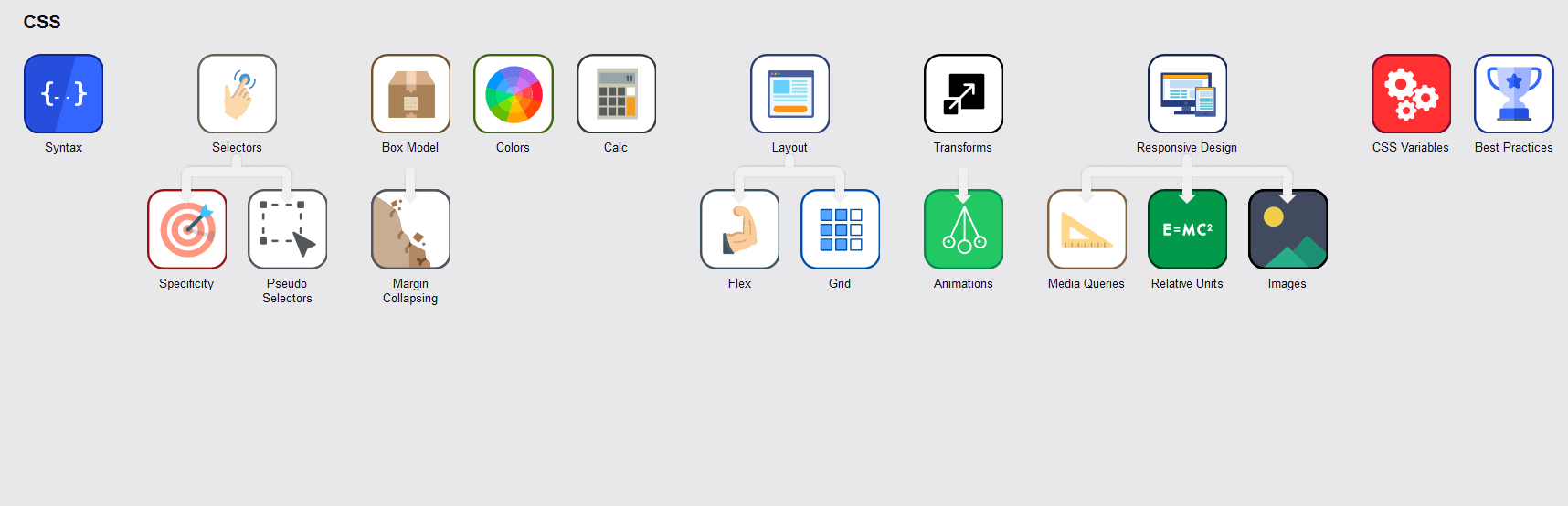
    推荐理由:这个项目总结了一系列对于网络开发者来说必要的技能,每个技能都提供了一些资源链接来方便读者进行学习。并且这个项目在自己的网页上使用树的方式来表达各个技能之间的关系,配合可视化的图标让读者能够很快理解这些技能。

    今日推荐英文原文:《How to Choose Your Next Side Project》作者:Filipe Silva
    原文链接:https://medium.com/better-programming/how-to-choose-your-next-side-project-9dbe429e6f86
    推荐理由:要开始一个项目自然需要有目的的开始

    How to Choose Your Next Side Project

    A guide to help you choose side project ideas with purpose in mind

    If you are reading this article, I’m willing to bet you have also read your fair share of “side project ideas” posts. I also love going through those, curious as I am, in search of some magical spark, some rabbit hole to lose myself in with abandon for a couple of months.

    Well, this is not that kind of post. Not in isolation, at least. This will be a trilogy of articles about side projects and rest assured, a list of fun side projects is coming in the second post.

    The weird thing about those lists is this feeling that for each article written about fun projects, the more pressure we face to always be working on one. If that was not enough, I have to admit, they also induce some kind of analysis-paralysis.

    All projects have different pros and cons, technologies, and degrees of challenge, which can make the first step, picking one idea and starting to work on it, almost impossible.

    I have been thinking about this problem, and I’m going to propose a few guidelines to help you decide on what you are going to have fun with developing, next.

    There are so many of us with skills to create something meaningful, that even if I get one person unstuck, it would be already a big win for me.

    So, fasten your seat belts and come with me.

    Why Do You Want to Build a Side Project?

    Investigate your why. Ask yourself the question and don’t stop with the first answer. Ask again: “Why is that?”

    This is not to discourage you if you don’t like soul searching, or because you think you might find reasons that will make it even harder to get started.

    The clearer you can make the reason why you want to start working on a new project, the easier it will be to make all the decisions leading you through it.

    Starting with, you guessed it, picking the right idea from all the ones in articles like this or those bouncing around in your head.

    Let’s look at an example, shall we?
    • “I want to build a side project because I want to experiment with some technologies.”
    • “Why do you want to experiment with some technologies?”
    • “Because I see an increasing number of people talking about them and I want to see what they are all about.”
    • “Why do you want to see what they are all about?”
    • “Because I want to check if they could make my job easier.”
    • “Why do you want to check if they could make your job easier?”
    • “Dude, seriously?!”
    Alright, that was a piece of dialogue that won’t win any Nobel prizes. Let’s imagine though, we reveal our why to be: “I want to create a side project so that I can check if these technologies can make my job easier”.

    We can use it to give us some perspective. We know what we do at our jobs, the kinds of problems we solve, some nagging constraints even.

    If you are currently building some microservices back end for an online shop, and you want to start a side project to explore some technologies to help you with it, I would say the benefits of developing a recommendation service, or a weather app, are much more aligned to your purpose than another to-do app or a Twitter bot.

    Notice that I’m not saying those are bad side projects ideas, but I’m only saying there are better alternatives to what you are looking for.

    This is the great thing about figuring your why first. It narrows your choices, making clear what the best options available are.

    My Favorite Reasons to Start a Side Project

    It helps to have a clear purpose to start something. That is clear. Which doesn’t mean there will be only one reason why you would start that side project. If more than one reason converges into the same idea, I would say your chances of having a winner increased.

    The list below is a non-exhaustive compilation of reasons I look for when evaluating if a side project idea has the potential to fulfill the purpose I establish for it. Use them to decide your next project if you see yourself in them.

    I will learn something from it

    The challenge, today, is almost to not learn something when you develop a new piece of software. Even if you just turn on the auto-pilot and produce the same looking web page for the 40th time, you will probably learn a new shortcut that will be part of your workflow from then on.

    Being a new web framework, a new language, a new best practice, a new way to integrate existing tools, every day there is something new that can interest you and can provide a starting point to build something with it.

    Bonus points if you challenge yourself to step a little bit outside of your comfort zone. My advice is to never consider yourself incomplete, or missing out if you are not touching all bases.

    You can’t learn everything, but you can always be learning something.

    That’s the advantage of starting a project with this purpose in mind.

    I will use what I built afterward

    Building something you know you will use is awesome motivation. You will be after something you need, and it will be harder to stop you until you are done. Better yet, if it’s something you need, there are probably others like you, who will gladly use what you come up with.

    This can be one of the best filters of side project ideas. It becomes easy to exclude all project ideas that you already see you won’t use or those for which you are already using a great product with the same features.

    Don’t throw, what you think is, an interesting project idea just because you don’t see a use for it, though. Others might find it the solution to their problems.

    Take into account that you might be the only one using your project in the end, so don’t tie the value of what is supposed to be a fun experience into having others using it as well.

    I estimate a short-medium completion time

    A short-medium completion time is something between a weekend and two months. I would choose a side project idea based on this criteria because I don’t know the future, if I will be having fun throughout the journey, or if I’m getting out of the project what I intended.

    So, to avoid spending too much time on something that is not going where I want, I limit that time frame from the start.

    This would be harder to do if I started working on something that won’t see the light of the day for six months, or a year. By that time, if I’m far away from my intended destination, I might have lost six months, which hurts much more than one.

    Reduce the size of the bets you make. It’s your time on the line, it’s the opportunity to be having more fun, learning something more interesting that you are not taking because you might be holding on to something for six months before any results.

    If your two-month project is complete, great! Time to review and assess if you want to double down on it or start a new one, but independently of what you decide, you know you gave it your best shot and if there are any losses, they won’t be critical.

    I see value in it even if I will be the only one using it

    This one is related to “I will use it afterward”. Maybe “warning” is too strong of a word, but I would say we should avoid deciding to start a side project based on the bet that others will have to use it as well for it to be successful.

    You are the only person you can count on will use what you will build. So, if you want to go ahead and build a social network, be prepared for the moment where you are the only one there. If you build a job board, be prepared to have zero jobs posted.

    There’s always a moment in every product where you are the only one using it, but if you are looking to start a side project, this is a filter that might come in handy.

    If you want to have lots of other people using what you will be developing, I would steer to a group of side projects ideas, and if you don’t care if any people use it in the end, then I would consider another group entirely.

    I want a new source of income

    Like the previous point, this reason is something you can start from, but you can’t guarantee the payoff will be there for you after you finish. Unless you have people already paying you before you start, that’s the picture.

    This shouldn’t discourage you from starting a side project with this reason behind it. Survivorship bias or not, the examples of people that started with the same intention and built profitable businesses from it are many.

    It’s also possible to filter your list of ideas with this reason in mind. You can investigate similar solutions to the ideas you have, by checking their “pricing” sections on their websites, looking for public MRR reports, the number of paying users, etc.

    Find whatever you can get that lets you know if people are running successful businesses with similar ideas to the ones you are looking into. This will let you filter out many ideas where you don’t see obvious signs of money being exchanged at the amount you are looking for.

    I can’t shake the idea out of my head

    This is a special reason to start a side project. It works on many levels. If you look at list after list of ideas and there’s this one you can’t forget about, that’s the one you should start.

    If you want to start a side project where every reason I listed until now doesn’t apply, but you still can’t let it go, well, the decision is made, and you should throw everything at it. This is a powerful reason to start something. On a deeper level of your subconscious, you are already convinced.

    You should know yourself enough to tell if this happens all the time, where you could be just chasing a new shiny object, maybe even quitting the side project you are working on, to replace it with this new idea.

    Try to at least give it a few days, see if you still want to start it then. Or, if you are in the middle of another project, with a reasonable estimated completion time, why not finish that first, and if this new idea is that meaningful, you can build it afterward.

    On Side Projects, Default to Start

    This is apparently against what I just wrote throughout the article, but the strongest reason to start something will always be because you want it. If nothing else, start something and see where that takes you. You can always, with more or less difficulty, change course or start a new journey.

    Looking in retrospect at my last side project, Win-Win, I can see in it all the reasons I listed but one, as fueling my motivation, giving me a purpose.

    I didn’t start with the idea of having a new source of income (it’s still not very clear how to do that if you are bargain-finding in the used board games market), but I was checking all the other boxes.

    I was putting into practice a new language I was learning and doing all the front-end development (being a back-end developer ). I’m still using it almost every day since I launched it.

    I completed it in roughly two months. Its value is independent of having others using it. And, yes, I couldn’t get the idea out of my head until I finished developing it.

    Next time you are looking for side project ideas, first try to find the reasons why you want to start it, so you can better decide what and how. We know ideas are everywhere and the means to bring them to reality were never so accessible as they are today. We know the execution of those ideas is what counts.

    If our chances of success increase 1% just because we work on something that aligns with our purpose, isn’t that time well spent?

    Isn’t that reflection worth it if it gets us a little bit further in our path to a successful side project?
    下载开源日报APP:https://opensourcedaily.org/2579/
    加入我们:https://opensourcedaily.org/about/join/
    关注我们:https://opensourcedaily.org/about/love/
  • 开源日报第743期:《Eclipse Theia》

    10 4 月, 2020
    开源日报 每天推荐一个 GitHub 优质开源项目和一篇精选英文科技或编程文章原文,坚持阅读《开源日报》,保持每日学习的好习惯。
    今日推荐开源项目:《Eclipse Theia》
    今日推荐英文原文:《Quibi gains 300K launch day downloads, hits No. 3 on App Store》

    今日推荐开源项目:《Eclipse Theia》传送门:GitHub链接
    推荐理由:Eclipse Theia是一个可扩展的平台,整合了云端IDE和桌面IDE,并使用最先进的Web技术,早期的贡献者包括ARM、Arduino、EclipseSource、爱立信、Gitpod、谷歌云、IBM、Red Hat、SAP和TypeFox等公司, 号称是Visual Studio Code的真正开源替代品。
    今日推荐英文原文:《Quibi gains 300K launch day downloads, hits No. 3 on App Store》作者:sarah perez

    原文链接:https://techcrunch.com/2020/04/07/quibi-gains-300k-launch-day-downloads-hits-no-3-on-app-store/
    推荐理由:Qiubi, 一个拥有古怪名字的移动流媒体服务软件, 在appstore上线的第一天就达到了30万的下载量登上榜首, 让我们来看一下这款app的特别之处吧.

    Quibi gains 300K launch day downloads, hits No. 3 on App Store

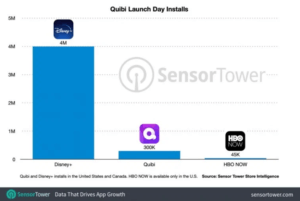
    Quibi, the oddly-named mobile streaming service founded by Jeffrey Katzenberg, was downloaded over 300,000 times on launch day, according to preliminary data from app store intelligence firm Sensor Tower. That’s only 7.5% of the approximately 4 million installs Disney+ saw when it launched in the U.S. and Canada on November 12, 2019. However, it was enough to send Quibi’s app to nearly the top of the charts on the App Store. Today, Quibi is the No. 3 app on the Apple App Store, but only No. 29 on Google Play.

    The bigger jump up the charts on iOS could be attributed to Quibi being heavily promoted by App Store editorial across a number of sections at launch. This includes in a large, scrollable banner at the very top of the “Apps” page on the App Store, as well as inclusion in the curated “Apps We Love Right Now” collection directly below. That likely drove a number of day one downloads from curious App Store visitors.

    Apple’s interest in promoting Quibi has to do with it being a subscription-based product, which is a source of revenue for the App Store. Though Quibi’s streaming service is available for the first 90 days for free and free for a year for T-Mobile unlimited wireless customers, it will later require an in-app purchase of either $4.99 per month or $7.99 per month for either its ad-supported or commercial-free streaming plan,respectively.

    Sensor Tower also noted that Quibi’s debut was far ahead of HBO NOW’s launch back on April 7, 2015, five days before the “Game of Thrones” Season 5 premiere. But that’s perhaps not the best comparison. Not only did that event take place several years ago, HBO NOW was then only one of several ways to watch HBO content. The majority of the network’s viewers at the time already had access to HBO through their pay-TV subscription — and if they wanted to watch on mobile, they could use the existing HBO GO app to do so.

    Quibi, on the other hand, is only available through mobile. So this 300K figure represents its total customer base at launch, not just some small portion looking for an over-the-top option.

    Before yesterday’s debut, Quibi had offered its app for pre-order through the App Store in an effort to boost day one downloads. It’s unclear how well that effort paid off, but Sensor Tower says it front-loaded a “significant number” of launch day downloads.

    The app itself offers a lot of star power with big names including Sophie Turner, Liam Hemsworth, Chance the Rapper, Jennifer Lopez, Chrissy Teigen and others appearing in Quibi’s shows available today. And thanks to Katzenberg’s connections and (Quibi’s massive $1.75 billion in funding) Quibi promises content from filmmakers like Steven Spielberg, Guillermo del Toro, Lena Waithe and Catherine Hardwicke and other stars will arrive soon.

    But consumer demand for a mobile streaming service designed for our busy, on-the-go lives where we only have minutes of downtime to spare is something that’s no longer relevant in the quarantine era where we have endless hours to binge TV at home. And Quibi is currently without an AirPlay or Chromecast option, which makes it a poor choice for stay-at-home viewing.

    The 300K downloads is an early figure, to be fair. It won’t be clear until the 90-day trial wraps how many stay with Quibi, choosing to pay. But Qubi’s launch numbers don’t indicate a breakout success, either. Quibi may be at the top of the charts for now, but it still has a lot to prove.
    下载开源日报APP:https://opensourcedaily.org/2579/
    加入我们:https://opensourcedaily.org/about/join/
    关注我们:https://opensourcedaily.org/about/love/
←上一页
1 … 72 73 74 75 76 … 262
下一页→

Proudly powered by WordPress