• 开源镜像
  • 开源沙龙
  • 媛宝
  • 猿帅
  • 注册
  • 登录
  • 息壤开源生活方式平台
  • 加入我们

开源日报

  • 开源日报第762期:《Linux资源监视 Bashtop》

    29 4 月, 2020
    开源日报 每天推荐一个 GitHub 优质开源项目和一篇精选英文科技或编程文章原文,坚持阅读《开源日报》,保持每日学习的好习惯。
    今日推荐开源项目:《Linux资源监视 Bashtop》
    今日推荐英文原文:《Getting to know our new, virtual world》

    今日推荐开源项目:《Linux资源监视 Bashtop》传送门:GitHub链接
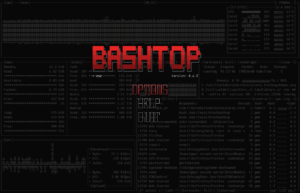
    推荐理由:Bashtop 是一个 Linux 资源监视器,可以显示处理器、内存、磁盘、网络和进程的使用情况与状态。
    今日推荐英文原文:《Getting to know our new, virtual world》作者:Patricia Dugan
    原文链接:https://opensource.com/article/20/4/virtual-community-management
    推荐理由:现在的强制性隔离使得人与各种事物的交互成为虚拟,或许可以从中看见一点未来的端倪。

    Getting to know our new, virtual world

    Our current forced physical separation could generate innovations that actually bring our communities closer together.

    Witnessing the ongoing global impact of COVID-19 is a profoundly affecting experience that continues to humble us all in ways we couldn’t have anticipated. Technology organizations are quickly evolving within this new reality, in which all of our human interactions are virtual until further notice.

    Virtual open source community management

    When it comes to nurturing cultures designed to promote and reward open source innovation—as well as communities’ economic, technological, and physical wellbeing—I can best speak to those I help build and manage. I believe communities should be built by weaving a tapestry of demographics and ranges of expertise. They should do this in a way that facilitates rich communication and empowers those building open source software to share knowledge with each other.

    The move to virtual connection and digitalized events only makes these methods more crucial.

    I’ll share an example. Recently, I was speaking with a pillar of the Traefik open source community, known as a Traefik Ambassador, based in Turkey, over video conference about a potential webinar. He suggested that, instead, we expand the speaker set to include other community members. Soon, we’d invited other contributors from Poland and Switzerland. We met online, and out of that conversation, the webinar has evolved into a collaborative series with community members taking turns presenting insights and melding different types of software together. What struck me was that if we’d had this conversation just one month ago, it would have simply focused on the creation of an asset. Now, contributors are bonding over a purpose-driven creation, with greater intention around facilitating innovation and excitement.

    Based on my experience building and growing open source communities, I believe that this new era of virtual connection offers an unprecedented opportunity for innovation and growth—as long as it is managed with equal focus on the people creating it. Below are five observations on how the world of open source can positively shape the future of innovation in a virtual and seemingly uncertain world.

    The virtual world is flat.

    Open source communities, teams, and backing companies provide an exceptional model of how to accelerate innovation. That’s especially true in these extraordinary times. At its core, open source democratizes the development process, something we see replicated more widely in our new virtual ecosystems. As the opportunity for input becomes more inclusive, organizations are seeing a flattening in infrastructure, both in communications and in operations. Existing hierarchical power structures are weakening as more voices are heard, and the best ideas are given the chance to rise to the top through greater exposure.

    As social distancing makes backchannel and handshake agreements much more complicated to execute, I predict that the traditional dance required to access and take positions in leadership will be replaced by flatter, more open methods that ultimately produce fresher—and better—perspectives. Online communication has a way of laying bare the real substance of interactions and ideas, bolstering meritocracy that’s central to the strength of open source.

    The virtual world is fast.

    This “flattening” structural shift has the potential to increase the pace and quality of innovation, as virtual events and communications widen the spotlight to now shine a light on previously unseen contributors. Creative minds among engineers, developers, and others outside of traditional leadership positions will leverage their comfort with the web and virtual channels to find each other and collaborate faster. This is nothing new for those in open source, and I expect organizations still clinging to legacy approaches will find themselves investing in learning how to implement flatter, virtual communications structures, and beginning to build them into traditional operational models. This means doubling down on efficiency and being willing to let go of the “it’s always been done this way” mentality.

    The virtual world needs community.

    Developers can conserve energy attending virtual events: there’s no commute, nor other distractions from the work at hand. Working remotely and connecting only via virtual mediums enables open source contributors to create, share, and use code just about as fast as their brains allow, empowering rapid code contributions, collaborations, and new solutions produced with velocity.

    While this shift may result in productivity gains, organizations must be careful of creating the impression that a team member’s most important asset is their brain. When open source developers were asked what the best part of their job was, 62% claimed it was their “personal passion.” Recognizing individuals as unique contributors to open source communities is necessary and essential to development—both technical and human. During this period, when we’re hitting the pause button on in-person interaction, remote interactions via chats, video conferences, and phone calls will enable the human moments necessary for growth and connection. Those in open source rely on the power of community, and this extraordinary time will require the continuous and earnest commitment to it.

    The virtual world is composed of individuals.

    The potential for greater innovation and meritocracy through virtual-only channels will only be realized if communities, organizations, and individuals also pursue and achieve wellness. It’s crucial for the interpersonal bonds that maintain our energy and psychological health—traditionally forged through real-life, face-to-face contact—to continue to exist as part of the way we now work. If that disappears, there’s the risk that our industry and communities become purely transactional, lacking the joy and drive that carries work forward, much less great work and innovation. Developers are especially rooted in a sense of purpose, with only 3% reporting that money and perks were the best part of their job.

    Overall wellness and support to prevent burnout should already have been central considerations for modern organizations, but they are even more important now. Virtual connectivity may set us up to work fast, but that can backfire if we’re not also set up to be well.

    The virtual world needs kindness.

    I also predict that virtual-only communication will close the distance between our online avatars and ourselves as real people. The impact of “toxic” individuals, hidden behind a computer, with little to no consequence for being a “bad actor,” will be reduced and less acceptable. A growing presence of new voices will set the tone, adhering to well thought out codes of conduct, making poor behavior explicitly unwelcome. As much of our connection moves online, the norms that guide our offline behavior will become increasingly important. We’ll transition to a less individualistic paradigm, and open source’s long history of considering what defines good citizenship will offer insight to those looking to integrate a sense of shared responsibility into organizations.

    I feel extremely grateful to be in technology, particularly in the open source world, given it’s an industry built upon the promise of innovation. At least for the moment, we as an industry can serve as a lighthouse for connection in difficult times, and as a model for collaboration and intention for those not as familiar with how to be highly productive in a virtual world. For the open source community and beyond, there is a great opportunity to lean into creating as much beneficial virtual culture as we can. Through this experience, we’ll all learn new ways of interacting, which will serve us well in the future.


    下载开源日报APP:https://opensourcedaily.org/2579/
    加入我们:https://opensourcedaily.org/about/join/
    关注我们:https://opensourcedaily.org/about/love/

  • 开源日报第761期:《上古版本 98.css》

    28 4 月, 2020
    开源日报 每天推荐一个 GitHub 优质开源项目和一篇精选英文科技或编程文章原文,坚持阅读《开源日报》,保持每日学习的好习惯。
    今日推荐开源项目:《上古版本 98.css》
    今日推荐英文原文:《Is Deep Cloning Coming to Our Browsers?》

    今日推荐开源项目:《上古版本 98.css》传送门:GitHub链接
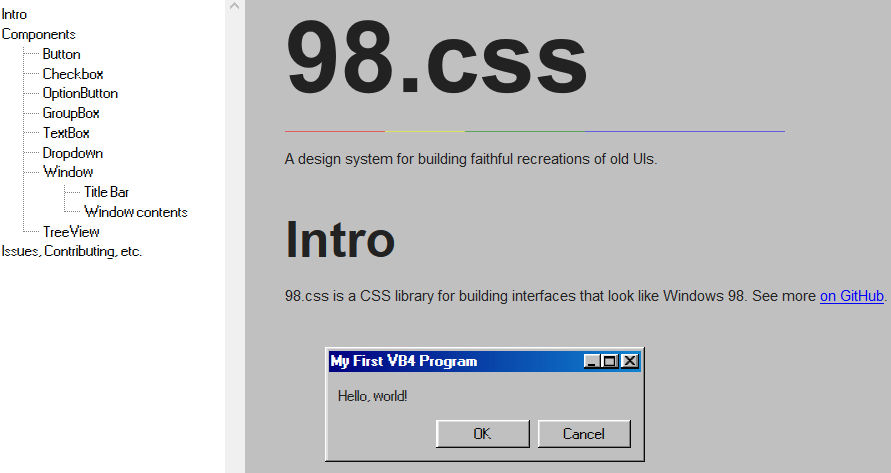
    推荐理由:现在 UI 设计变得越来越友好,windows 98 风格的 UI 界面已经逐渐销声匿迹,不过有的时候为了特地表现出古老,没准还需要把它拿出来。这个项目是一个纯 CSS 库,里面充满了上古版本的 UI 界面,打开官网就会发现古老的气息扑面而来。

    今日推荐英文原文:《Is Deep Cloning Coming to Our Browsers?》作者:Johannes Baum
    原文链接:https://medium.com/better-programming/is-deep-cloning-coming-to-our-browsers-b703acde29eb
    推荐理由:结构化克隆似乎能成为一种深度拷贝的解决方法

    Is Deep Cloning Coming to Our Browsers?

    Read about a possible exposure of the structured clone algorithm in major browsers

    There are many discussions on the web about deep cloning in JavaScript. While there are native solutions like destructuring or Object.assign() for shallow clones, deep clones had to be created using third-party libraries like Lodash or abusing APIs like MessageChannel to take advantage of unexposed implementations of structured cloning as proposed by the HTML standard.

    According to the usage of third-party libraries like Lodash, the popularity of questions regarding deep cloning in JavaScript on Stack Overflow, and the common (and in many cases problematic) usage of JSON.parse(JSON.stringify(…), there seems to be a large demand on the developer side for a native solution.

    Structured Cloning

    The structured clone algorithm was proposed by the HTML standard, already has an implementation in common browsers, and is used internally (i.e., for transferring data between web workers or for storing data with IndexedDB).

    It recursively walks through the object to be cloned and maintains a map of visited references in order to avoid infinite cycles. Therefore circular structures are not a problem for this algorithm, compared to the JSON.parse(JSON.stringify(…)) approach, for example.

    In the JavaScript realm, this means that most types (such as Date, RegExp, Array, Object, Map, and Set) are supported. However, the prototype chain is not considered and there are some more things to look after. If you’re interested, check out the link to the MDN Web Docs in the references below.

    Structured clone vs. deep clone

    A deep clone (also deep copy) is a copy of an object such that new copies are created for any referenced objects. What does that mean for JavaScript objects? Here it gets difficult. While some people might be satisfied with just the structural data, others might want to copy the prototype chain. So deep clone is a rather ill-defined term.

    The structured clone algorithm, on the other hand, is a well-defined algorithm and therefore defines pretty well what a structured clone is. One could say it is a specific implementation of a deep clone.

    Structured Cloning in Browsers?

    While Node.js exposed the implementation of structured cloning by the v8 JS engine as their Serialization API, many people are still waiting for an exposed implementation of a browser. If you are one of these people, there is good news: A proposal in the HTML specification already exists.

    Unfortunately, it seems that at the time writing, only Firefox is interested in implementing it. However, the topic is still discussed, so don’t give up hope if you are craving that feature.

    Even if it is only at the stage of a proposal, it looks like the exposure will come in the form of a global function structuredClone() that will make structural clones as easy as:
    const myClone = structuredClone(originalObject);
    
    If you want that feature, I encourage you to advocate for the exposure of the structured clone algorithm so we might see it on top of the backlogs of major browsers soon
    下载开源日报APP:https://opensourcedaily.org/2579/
    加入我们:https://opensourcedaily.org/about/join/
    关注我们:https://opensourcedaily.org/about/love/
  • 开源日报第760期:《learnGitBranching》

    27 4 月, 2020
    开源日报 每天推荐一个 GitHub 优质开源项目和一篇精选英文科技或编程文章原文,坚持阅读《开源日报》,保持每日学习的好习惯。
    今日推荐开源项目:《learnGitBranching》
    今日推荐英文原文:《Coursera to give unemployed workers free access to 3,800 online courses 》

    今日推荐开源项目:《learnGitBranching》传送门:GitHub链接
    推荐理由:本项目是一个 git 存储库可视化工具、沙箱以及一系列教育性教程和挑战。 它的主要目的是帮助开发人员了解可视化的强大功能。 这是通过一个不同级别的游戏来熟悉不同的 git 命令来实现的。
    今日推荐英文原文:《Coursera to give unemployed workers free access to 3,800 online courses 》作者:
    原文链接:https://www.theverge.com/2020/4/25/21236679/coursera-free-unemployed-workers-coronavirus
    推荐理由:鼎鼎大名在线学习平台 Coursera 将向因冠状病毒流行而失业的人免费提供3800门课程,这将鼓励人们通过学习技能来致富.

    Coursera to give unemployed workers free access to 3,800 online courses

    Online learning platform Coursera will make 3,800 of its courses available for free to people unemployed due to the coronavirus pandemic, Gizmodo reported. The Coursera Workforce Recovery Initiative is part of its Coursera for Government training program for government employees.

    The goal of the initiative is to help workers develop skills to become re-employed, according to a Coursera blog post. You can’t apply as an individual for the free courses; government agencies that serve unemployed workers have to apply for access.

    “Coursera for Government is designed for government agencies to provide reskilling and upskilling programs for entire communities,” according to the Coursera website.

    About 26 million people in the US have filed for unemployment in the past five weeks amid stay-at-home orders.

    The courses include company-specific training programs from Coursera partners like Google and IBM, as well as courses in the areas of cloud computing, emerging technologies, machine learning, big data, and other business-specific training.

    “Coursera, along with its community of partners, is ready to serve the millions of workers who have lost their jobs and are going to have a hard time returning in a slow economy,” Coursera CEO Jeff Maggioncalda told Forbes.

    State agencies in Arizona, Illinois, and Oklahoma, will be the first in the US to make the courses available. The governments of Colombia, Costa Rica, Greece, Malaysia, Panama, Ukraine, and Uzbekistan also are participating, according to the company. Coursera expects to add more government agencies to the program in the coming weeks.
    下载开源日报APP:https://opensourcedaily.org/2579/
    加入我们:https://opensourcedaily.org/about/join/
    关注我们:https://opensourcedaily.org/about/love/
  • 开源日报第759期:《游戏引擎 Godot》

    26 4 月, 2020
    开源日报 每天推荐一个 GitHub 优质开源项目和一篇精选英文科技或编程文章原文,坚持阅读《开源日报》,保持每日学习的好习惯。
    今日推荐开源项目:《游戏引擎 Godot》
    今日推荐英文原文:《7 Ways to Prove Your Programming Skills》

    今日推荐开源项目:《游戏引擎 Godot》传送门:GitHub链接
    推荐理由:Godot Engine是由 Juan Linietsky 和Ariel Manzur 开发的开源游戏引擎,可以制作2D和3D游戏,在宽松的MIT许可证下,是完全免费和开源的。游戏《Kingdom Rush(王国保卫战)》和《Doodle Jump(涂鸦跳跃)》都是由该引擎制作而成。
    今日推荐英文原文:《7 Ways to Prove Your Programming Skills》作者:Shafi Rizvi
    原文链接:https://medium.com/better-programming/7-ways-to-prove-your-programming-skills-438f0f751184
    推荐理由:一些提升自己的好习惯

    7 Ways to Prove Your Programming Skills

    Fail the interview but get the job

    How good are you as a programmer? Can you impress your interviewer with your skills? Here is how you can prove to them you’re worth hiring.

    Back in the day, being hired as a programmer was just a matter of paper qualifications and a few skills in programming. Things have changed drastically with time. Your qualifications and programming skills alone will not get you the job. The market is flooded with college graduates, some filled with pure talent and passion, and others who pretend to be so. The excess demand for jobs has forced programmers to sharpen their skills. The fourth industrial revolution has made programmers learn and study things in various other fields, as well. In other words, employers are hunting for the best programmers who also possess knowledge in other fields.

    Another concern for programmers is their inability to prove their worth in an interview. You might be the best among the rest, but nailing a tech interview cannot be guaranteed. What follows are some great ways to impress your interviewer and prove you’re worth hiring.

    Tips to Prove Your Talent

    1. Contribute to open source projects

    What is so special about open source contribution? Well, there is a lot. But what I found interesting is that you learn from the experts in the industry. Not all your contributions to an open source project will be accepted. This sounds bad, but it’s not.

    Any contribution to the project will be reviewed by an expert before it’s merged into the actual project. Whenever you make a contribution, if there is any improvement to be made, you’ll get feedback with some guidance on exactly how to do it. It’s like someone mentoring you on how to improve your coding.

    Apart from this, you also can learn a lot more of the skills required by a software engineer, such as meeting people with the same interests as you, learning people skills, etc.

    If you have made any open source contribution, that’s a massive plus point to prove your talent and a sure way to impress the interviewer.

    Here is a guide to how to contribute to open source projects.

    2. Answer Questions on Stack Overflow

    Stack Overflow is any programmer’s best pal. Whenever a programmer encounters a problem in coding, probably the first thing they do is find an answer on Stack Overflow. But wouldn’t it be great if you could answer questions on the technologies that you’re fluent in and earn some reputation?

    Stack Overflow has a reputation associated with each account. Whenever you answer a question, based on the quality and accuracy of your answer, people can vote for you, which in turn will increase your reputation score. This score is a great way for employers to assess your talent since the score is generated by one of the best programming communities.

    Here is a guide to how to answer questions on stack overflow.

    3. Score on HackerRank, LeetCode, and GeeksforGeeks

    HackerRank, LeetCode, and GeeksforGeeks are some great sites to improve your coding skills by solving different types of challenges. You can use your preferred programming language to solve problems. You also can select your own topic to practice with the desired level of difficulty. For example, you can select a problem related to arrays with the required difficulty level and start solving.

    Based on the way you solved, you’ll be rewarded with a score. These scores will help to depict your talent in problem-solving, the use of algorithms, and data structures, etc.

    4. Try out new projects

    Coming up with creative ideas and developing your own projects is a nice way to try out what you have learnt so far. You might have learned various technologies and languages following various tutorials, but if you are unable to build a program, website, or a mobile app on your own, then your effort has gone in vain.

    A web app about yourself, a to-do list app, or a weather tracking app are a few projects you can try out while you are free. These will not only improve your coding skills, but you also can use them in your day-to-day life.

    5. Write articles

    Writing articles is a great way to express your passion towards what you love. Writing requires knowledge of what you write. Whenever you write something, you tend to study and do a small amount of research on what you are about to write. This helps to improve your knowledge to a great extent.

    It would be great if you can write articles on topics other than programming, as well. You don’t have to write specific things related to other fields, but you could write something generic, adding some technical aspects that will show that you have some basic knowledge in other fields, too. Additionally, it’s a way to exhibit your written communication skills, which is a requirement most programmers lack.

    6. Collaborate with your friends in various other fields

    As I mentioned in the beginning, the fourth industrial revolution has made almost all fields incorporate technology into their products and services. Even software companies are moving to niche markets rather than developing generic software. There are software companies specialising in finance, agriculture, transportation, food, and whatnot.

    Collaborating with your friends in other fields, engaging in a few projects related to their field, and contributing to some technical aspect, would be great plus points for you. For instance, you could collaborate with a friend in the field of agriculture, where they might need an app to track the weather or something similar.

    7. Show that you are passionate by what you share on social media

    Do not be surprised if your employer has a look at your social media accounts. I agree that social media is to have fun and enjoy your leisure time. And I am not trying to tell you to stop having fun on social media.

    But wouldn’t it be great if you could show your enthusiasm by what you share? Maybe you can try sharing memes related to programming and technical stuff. You can also share articles and videos on trending topics that people would love to read.

    Conclusion

    These are a few things you can practice to prove yourself a skilled programmer. It is a well-known fact that getting through a technical interview isn’t easy. But what will stop them from hiring you if you have proved your worth to them? As the famous saying goes, “actions speak louder than words,” so prove your skills by these actions.

    References

    • How to contribute to open source
    • How to answer questions on stack overflow

    下载开源日报APP:https://opensourcedaily.org/2579/
    加入我们:https://opensourcedaily.org/about/join/
    关注我们:https://opensourcedaily.org/about/love/

←上一页
1 … 68 69 70 71 72 … 262
下一页→

Proudly powered by WordPress