• 开源镜像
  • 开源沙龙
  • 媛宝
  • 猿帅
  • 注册
  • 登录
  • 息壤开源生活方式平台
  • 加入我们

开源日报

  • 开源日报第774期:《开放神经网络交换 ONNX》

    16 5 月, 2020
    开源日报 每天推荐一个 GitHub 优质开源项目和一篇精选英文科技或编程文章原文,坚持阅读《开源日报》,保持每日学习的好习惯。
    今日推荐开源项目:《开放神经网络交换 ONNX》
    今日推荐英文原文:《The Future of Code Is in Your Browser》
    今日推荐开源项目:《开放神经网络交换 ONNX》传送门:GitHub链接
    推荐理由:Open Neural Network Exchange(ONNX,开放神经网络交换)格式,是一个用于表示深度学习模型的标准,可使模型在不同框架之间进行转移。它使得不同的人工智能框架(如Pytorch, MXNet)可以采用相同格式存储模型数据并交互。
    今日推荐英文原文:《The Future of Code Is in Your Browser》作者:Owen Williams
    原文链接:https://onezero.medium.com/the-future-of-code-is-in-your-browser-2c51a08e8ab2
    推荐理由:当编程也搬到云端的时候,应该就不用为电脑和环境配置而发愁了,只需要任意一台能够访问网页的计算机,以及服务器的租金。

    The Future of Code Is in Your Browser

    Cloud-based coding environments like GitHub’s new Codespaces make programming more accessible

    (Photo: Chainarong Prasertthai/Getty Images)
    Over the past decade, desktop software has gradually been eaten by the web browser: Music moved from iTunes to Spotify and Pandora, word processing moved online to Google Docs and Office 365, and design moved from Photoshop to Figma.

    Web development, though, has remained loyal to the desktop, requiring increasingly powerful computers to handle modern programming. While code editing tools like Glitch and CodePen have allowed developers to do some work on the web, more complex development languages have remained stubbornly connected to desktop software.

    The popular software development hosting platform GitHub may be about to change that status quo. The Microsoft-owned company unveiled a new code editor called Codespaces last week that works entirely in the web browser, regardless of the device you’re using. Based on the same codebase as Microsoft’s Visual Studio Code editor — which runs on Windows, Linux, and macOS — Codespaces creates a button on the GitHub website that is a one-click route to your entire development environment online. Since GitHub is where many developers are already accessing and storing their code regardless of which coding environment they use, it’s a convenient place to launch a code editor. And there’s no need to install anything on your device.

    How to Build the Speedy Home Wi-Fi Network of Your Dreams

    To be clear, Codespaces isn’t just a code editor—it’s also an entire “containerized” version of your servers, meaning it allows you to preconfigure whatever resources you need, like a PHP server and a Redis cache, to work on a project.

    Made popular by a company called Docker, containers allow server functionality to be packaged into tiny, lightweight slices, which can be mix-and-matched together to build a development environment. If you’re working on a PHP-based Laravel project, for example, you’ll need a PHP server, MySQL, and a Redis cache. With containerization, you specify that you need each of these technologies, and they’re set up every time you open your codebase, making it easier to move between machines and reproduce your development environment without reconfiguring it on each device.

    Each Codespaces environment contains a Dockerfile, which specifies the containers and configuration of your environment, as well as a file that tells Codespaces how you want your development environment set up.

    Unlike development environments of the past, with Codespaces there is no need to configure local servers and applications to start coding. If a developer needs to quickly get up to speed on a project, it’s a single click to have all of your servers and configuration ready for development.

    Moving coding to the cloud also opens the door for connected developer experiences. A Live Share feature that works similarly to a shared Google doc allows remote developers to work together on a programming problem, with built-in audio and text chat.

    The master stroke of Codespaces, however, is a “remote” feature that allows developers to use their existing desktop installs of Microsoft Visual Studio Code whenever they want to, even if they don’t have a heavy-duty computer capable of running their actual codebase with them. When they’re on the go, they can connect to their Visual Studio Code environment using the feature and use the web editor in the cloud, with all the same setup, extensions, and even color schemes, as if they were working on their local machine.

    While cloud-based products similar to Codespaces, like Coder and Amazon’s Cloud9, have existed for three years, Codespaces’ advantage is that it’s directly integrated into GitHub.

    It’s worth acknowledging that getting Codespaces set up just right takes an investment the first time around: You need to figure out which technologies your project needs and ensure that it all comes together just right. But with little effort up front, when you click “code” on GitHub in the future, it’s all set up in the cloud a matter of seconds, ready to go.

    The Internet Relies on People Working for Free

    The debut of Codespaces is the latest in a series of efforts by Microsoft to build out the best developer experience in the industry. That started with the 2016 decision to add Linux support to Windows, a move that surprised the entire industry. Nobody expected Microsoft to add support for an open source operating system to its own proprietary system.

    Then, in 2018, Microsoft acquired code hosting service GitHub, followed by an acquisition this year of the code distribution service npm. In the meantime, the company developed Visual Studio Code into the most popular code editor, used by more than 50% of developers, according to the latest Stack Overflow Developer Survey.

    Presumably Microsoft hopes to monetize all of these products by winning over developers, who are likely to eventually host their projects on its cloud-hosting platform, Azure.

    But products like Codespaces a boon for people using lightweight devices like Chromebooks, or even the iPad, which limit the type of software their users are able to install. Cloud-based software circumvents those restrictions and means that the machine you’re using to write code is basically irrelevant, as long as you have an internet connection.

    For me, that’s what’s exciting about shifting software development into the cloud: freedom to use the computer I want to use, even if it’s not technically a great developer device (like the Surface Pro X, which uses a limited ARM-based processor). All I need is a modern web browser, nothing more.

    To that end, Codespaces may be the great equalizer for new developers — if your development environment is in the cloud, it doesn’t matter whether you’re writing code on a $5,000 MacBook Pro or a $300 Chromebook.


    下载开源日报APP:https://opensourcedaily.org/2579/
    加入我们:https://opensourcedaily.org/about/join/
    关注我们:https://opensourcedaily.org/about/love/
  • 开源日报第773期:《echarts库:incubator-echarts》

    15 5 月, 2020
    开源日报 每天推荐一个 GitHub 优质开源项目和一篇精选英文科技或编程文章原文,坚持阅读《开源日报》,保持每日学习的好习惯。
    今日推荐开源项目:《echarts库:incubator-echarts》
    今日推荐英文原文:《Food apps in Chicago will soon show the premium you pay for delivery》

    今日推荐开源项目:《echarts库:incubator-echarts》传送门:GitHub链接
    推荐理由:ECharts是一个免费的、功能强大的图表和可视化库,它提供了一种简单的方法来为您的商业产品添加直观的、交互式的和高度可定制的图表。它是用纯JavaScript编写的,并基于zrender,这是一个全新的轻量级canvas库。
    今日推荐英文原文:《Food apps in Chicago will soon show the premium you pay for delivery》作者:
    原文链接:https://www.engadget.com/chicago-itemized-breakdown-delivery-apps-210224890.html
    推荐理由:面对严峻的疫情形势,各大app的开发者也在积极努力,做出功能更加完善的app,以帮助人们渡过难关.

    Food apps in Chicago will soon show the premium you pay for delivery

    In a first-of-its-kind policy change, the City of Chicago will require companies like DoorDash to disclose to customers how much restaurants pay when they order food using a delivery app. If you live in the city, you’ll see an itemized breakdown that lists how much the restaurant you ordered from paid to the company that delivered your food, as well as the menu price of each dish and beverage, the cost of delivery and tip as well as any taxes. Additionally, you’ll see the breakdown both before and after you place your order.  Chicago will start enforcing the new rule on May 22nd, giving companies like DoorDash and Grubhub less than two weeks to make their apps compliant. It applies to all delivery companies, whether they allow you to order through a mobile app or website. Companies that don’t provide a breakdown after the 22nd will face a daily fine between $500 and $10,000. The policy comes as restaurants across the US and much of the world struggle to stay in business. In most instances, even depending on deliveries to offset not being able to serve diners in their own spaces, some restaurants have closed permanently.

    Unsurprisingly, the companies the policy targets aren’t fans. “We support policy and legislation that help restaurants serve their communities, and a path to reopening those businesses must be the focus,” a Grubhub spokesperson told NBC Chicago. “These arbitrary disclosure rules will do exactly the opposite of their intent by causing confusion to consumers.”

    The city, however, sees it as a way to make the entire delivery process more transparent. “By providing customers with more transparency when they use these delivery services, we can further ensure not only fair business practices for our restaurants but also maintain the innovation that is essential to this industry,” said Chicago Mayor Lori Lightfoot. In their defense, both Grubhub and DoorDash lowered their restaurant fees shortly after the coronavirus pandemic began. In Grubhub’s case, it even went so far as to waive fees for independent businesses. They also already provide a breakdown of the fees you pay as a customer. Of course, having more access to information can never hurt consumers, and it will be interesting to see if other cities adopt similar policies. 
    下载开源日报APP:https://opensourcedaily.org/2579/
    加入我们:https://opensourcedaily.org/about/join/
    关注我们:https://opensourcedaily.org/about/love/

  • 开源日报第772期:《C+安卓 rawdrawandroid》

    14 5 月, 2020
    开源日报 每天推荐一个 GitHub 优质开源项目和一篇精选英文科技或编程文章原文,坚持阅读《开源日报》,保持每日学习的好习惯。
    今日推荐开源项目:《C+安卓 rawdrawandroid》
    今日推荐英文原文:《It’s Okay To Take A Break》

    今日推荐开源项目:《C+安卓 rawdrawandroid》传送门:GitHub链接
    推荐理由:这世间总是会有各种各样的需求的,尽管可能让人不敢相信,但是这个项目打算实现使用 C 来完成安卓应用的听起来好像没啥用的需求。听起来似乎一时半会找不到要这么做的原因,不可否认的是这的确是以前从未想过的一种方式,有兴趣的话可以看看作者的油管视频:http://www.youtube.com/watch?v=Cz_LvaN36Ag
    今日推荐英文原文:《It’s Okay To Take A Break》作者:Carmen Fong, MD
    原文链接:https://medium.com/illumination/its-okay-to-take-a-break-1621587e2237
    推荐理由:在家工作可能会让人把工作与休息弄混

    It’s Okay To Take A Break

    My cousin told me that she and her fiancé work until midnight these days. They are both accountants, working from home, and they are working harder than they ever have before.

    My partner is currently working from home, doing telehealth visits and taking calls from hospitals. She says that it’s harder than working at the office, because it feels wrong to take a break when you’re on the clock.

    It’s okay to take a break.

    Working from home means that we have completely lost that thin, precarious line that separated our work from our lives in the first place. Over the past few years, that line had gotten even thinner because of phones and laptops and watches and all the different ways that people can get in touch with you. Watching TV at 8pm? Yes, your boss will ask you to attend a last-minute business dinner. Getting a haircut? You get an email saying you need to be on a call in two minutes. Going for a run? Yes, the hospital will call you on your watch. Now that our home is our workplace, are we allowed to have breakfast? Or break for lunch? Or sit on the couch at 2pm and scroll through your Instagram for half an hour?

    It’s called an honor system, so as long as you honor your responsibilities to get your work done, you can take a break.

    The other factor is, though, this illogical pressure that we have put on ourselves to do more because we can. We’re not commuting anymore, so that’s another hour to write. We’re not drinking anymore, so what else is there to do after dinner? Write another article? Either because we feel like we should be taking advantage of this time, or there’s this zeitgeist where people are sitting at home, consuming information online more than ever, I have felt the pressure to WRITE.

    I punch out one or two articles a day, about a thousand words each. I feel like I should be doing more. Every evening, as I scroll through other articles on Medium and the news, I think to myself, What’s even the point? No one reads what I write.

    That’s when I know I need to take a break. I close my iPad, my laptop and leave my phone charging on the nightstand and I pick up my latest Louise Penny mystery, or a new chapbook from New Michigan Press. Whereas my ratio used to be 20% writing and 80% reading, these days I find myself 80% writing and 20% reading. I’m trying to get closer to a 60–40 ratio, so I don’t burn out.

    In high school, I loved this poem by Rumi:
    Today, like every other day,
    we wake up empty and frightened.
    Don’t open the door to the study and begin reading.
    Take down a musical instrument.
    Let the beauty we love be what we do.
    There are hundreds of ways to kneel and kiss the ground.
    From The Book of Love: Poems of Ecstasy and Longing, by Jalal al-Din Rumi, translated by Coleman Barks.

    I have to admit that when I was younger, my main takeaway was the ‘we wake up empty and frightened’ part. In your teens, lacking direction, lacking knowledge of what the future would hold, every day felt like an experiment and you were the guinea pig.

    Now that I’m older, I realize that the point of this is that there are two ways we interact with the world. We either consume or we create (you may have heard me expound on this before). When we consume, we read a book, or buy things, order takeout and eat it — we are ingesting materials and ideas. When we create, we write, or make music, or make art out of food, or even being activists, and dancers, and doctors. We put out more energy than we take in.

    During this quarantine, I have found myself trying to use every spare moment to create, to create the beauty that I want to exist in the world. But it’s kind of hard, and a little bit tiring, to put that energy out all the time.

    All I’m saying is, there has to be a balance between consumption and creation. So it’s okay to take a break.
    下载开源日报APP:https://opensourcedaily.org/2579/
    加入我们:https://opensourcedaily.org/about/join/
    关注我们:https://opensourcedaily.org/about/love/
  • 开源日报第771期:《动态捕捉 pose-animator》

    13 5 月, 2020
    开源日报 每天推荐一个 GitHub 优质开源项目和一篇精选英文科技或编程文章原文,坚持阅读《开源日报》,保持每日学习的好习惯。
    今日推荐开源项目:《动态捕捉 pose-animator》
    今日推荐英文原文:《Cultivate Your Can-Do Attitude》

    今日推荐开源项目:《动态捕捉 pose-animator》传送门:GitHub链接
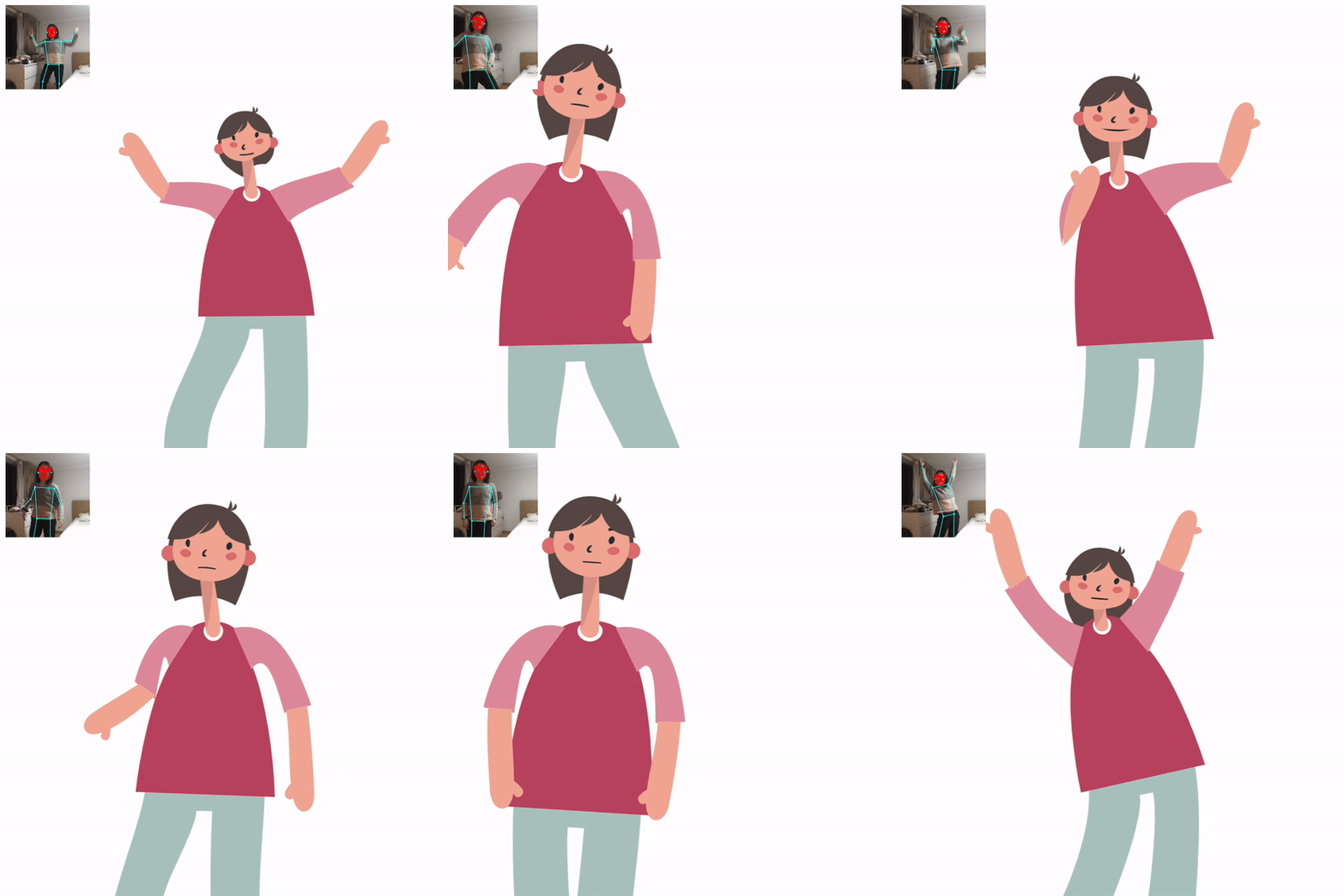
    推荐理由:Pose Animator根据PoseNet和FaceMesh的识别结果,绘制一个二维矢量图,并对其包含的曲线进行实时动画处理。它借鉴了计算机图形学中基于骨架的动画思想,能够实时捕捉角色的动作并将其应用于矢量角色。闲着的时候,做一个简易 vtuber 也不错。
    今日推荐英文原文:《Cultivate Your Can-Do Attitude》作者:Bytebase
    原文链接:https://medium.com/better-programming/cultivate-your-can-do-attitude-10864742d76d
    推荐理由:“不满是向上的车轮。”保持活力,保持动力。

    Cultivate Your Can-Do Attitude

    People who have a can-do attitude are ready to tackle any challenge that comes their way, no matter how big

    (Photo by Noah Silliman on Unsplash)
    When we look to people we admire, we can recognize that they probably didn’t start this way. They had a base skillset and way of being, bu then they worked hard and adopted a can-do attitude to become who they are today.

    The new Michael Jordan documentary is a great reminder of this.

    Michael Jordan is widely thought to be the greatest basketball player of all time. Watching the documentary, you can see that he became great because he believed in himself. He dedicated himself to improving his game, on and off the court. He brought total focus to every practice and workout.

    Michael Jordan’s unwavering can-do attitude and discipline propelled him from being great at basketball to the greatest of all time.

    So what can you do to cultivate your can-do attitude, both on and off the court?

    Uplift Yourself With Gratitude.

    (Photo by Ergita Sela on Unsplash)
    When things get challenging, it’s easy to become negative and lose sight of your can-do attitude. Gratitude grounds you in what’s important and boosts your energy.

    A research study by psychologists from the University of California, Davis, and the University of Miami, found that people who regularly write down things that they’re grateful for are more optimistic, feel better about their lives, and even exercise more.

    Gratitude is a great way to cultivate an optimistic can-do attitude. You can practice gratitude in your thoughts, writing, or conversations.

    Take Breaks

    (Photo by Sean O. on Unsplash)
    Your can-do attitude is something you want to cultivate as a life-long mindset. To be sustainable, it’s important that you take breaks — time you can take to relax and step back.

    In the Undoing Project, Michael Lewis relates how two renowned psychologists made a discovery over how the human mind works. One of the psychologists, Amos Tversky, said, “You waste years by not being able to waste hours.” By taking a step back, you can see what’s important and feel refreshed for any task you want to take on.

    Break Down Overwhelming Tasks

    (Photo by James Donovan on Unsplash)
    Often when you dread starting a task it’s because it’s too big. The first step to breaking down a task is a braindump. In the braindump phase, you write down everything that might be relevant to the task. Let your ideas flow completely unedited.

    Andrew Stanton is a writer. He worked on many Pixar hits, including Toy Story, Monsters Inc., and Finding Nemo. He says,
    The first pass at anything is always going to be a confusing mess.
    The braindump is a pressure-free way to start understanding what’s required of a task. It’s supposed to be messy and fast.

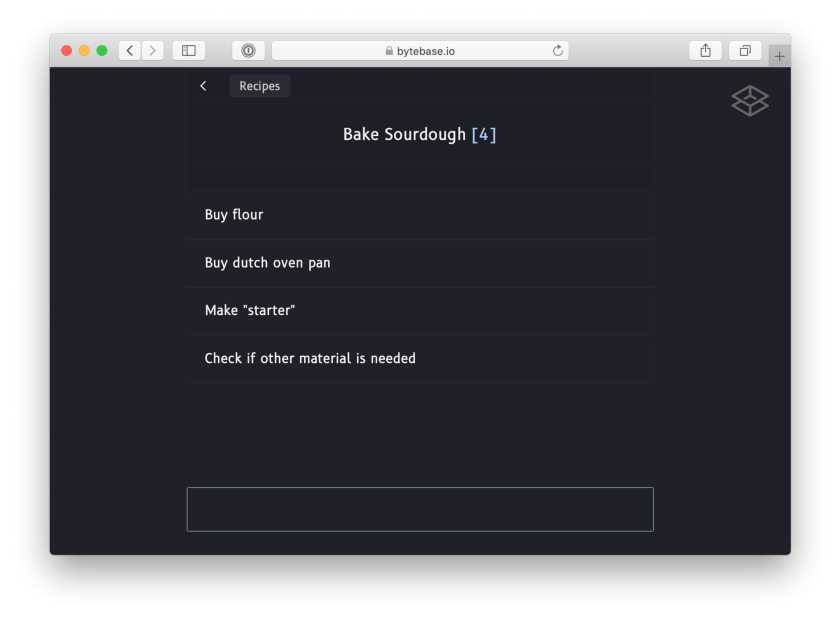
    For example, suppose I’m going to bake sourdough bread for the first time. I might start with the following braindump:

    (Braindump on how to bake sourdough.)
    Once you get everything down, choose one point from the list. See if you can write a small, actionable task from this point. If not, do another braindump on that one piece.

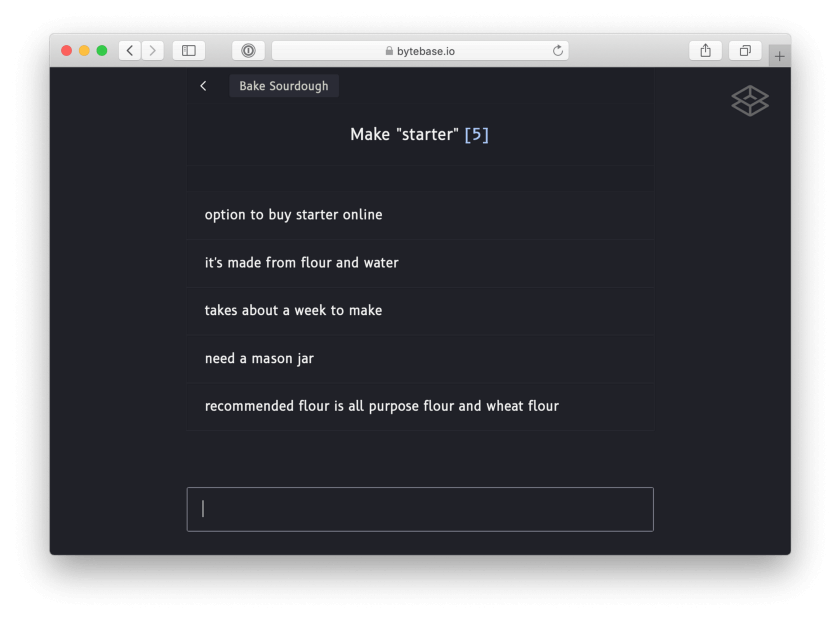
    In the sourdough example, “Buy flour” is actionable, but “Make starter” still has a lot of unknowns. We can do another braindump.

    (Braindump on how to make sourdough starter.)
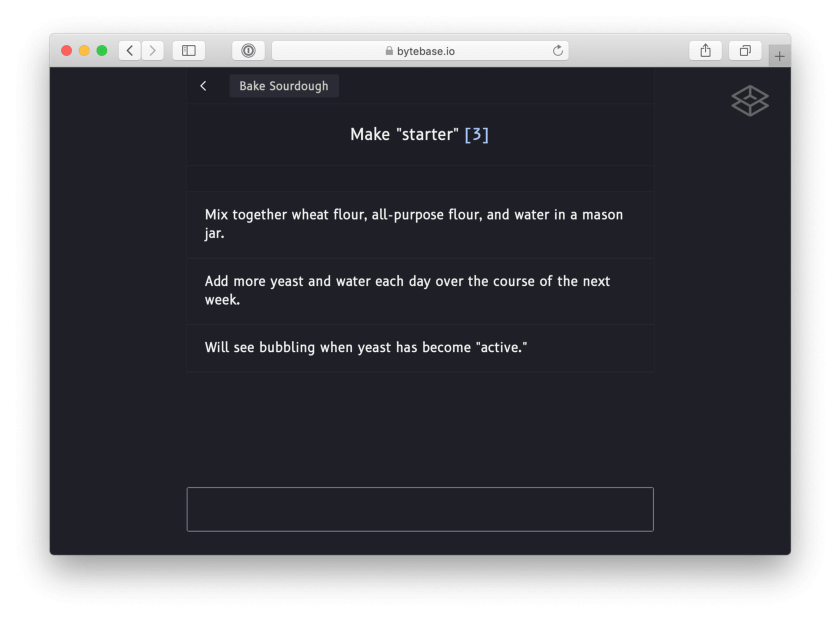
    When tasks are small enough, you’ll be able to write them down with specific verbs.

    For example, the task “Make sourdough” uses the broad verb “Make.” It’s too big. A more actionable and smaller piece of this task is “Mix together wheat flour, all-purpose flour, and water in a mason jar.”

    (Smaller tasks for making sourdough starter.)
    Small, specific tasks are approachable; they help you build momentum. This strengthens your can-do attitude.

    Celebrate Small Wins

    (Photo by Jamie Street on Unsplash)
    Don’t be afraid to be proud of yourself. You’re doing great things, every day — cheer yourself on!

    At Bytebase, we thow a “reveal party” for every feature we ship. At the reveal party, the builder plays the first 30 seconds of a high-energy song (e.g. Baba O’Riley), then they reveal the feature. No matter how big or small, we celebrate the win of shipping code as a team.

    Everyone has small daily wins that they can celebrate. Regular celebrations strengthen your momentum and can-do attitude.

    Be Clear on Your Motivation

    (Photo by Sarah Dorweiler on Unsplash)
    No matter what you’re trying to do, be clear on your motivation:
    • Why are you doing what you’re doing?
    • Are you working towards a broader goal?
    • Does this work help you become the person you want to be?
    • Does it help your loved ones?
    Understanding your motivation is especially important for larger tasks when things might get tough. By reinforcing why you’re working on what you’re doing, it’s easier to push through.

    Enjoy What You Do

    (Photo by Lili Popper on Unsplash) By nurturing your can-do attitude you not only stay on track with your goals but enjoy the journey as well. Tasks that seem dreadful and intimidating become simple and actionable. You can spend less time feeling blocked or overwhelmed and more time in flow.


    Thanks for reading!

    Bytebase is note-taking tool that helps you nurture your can-do attitude by making braindumps easy. Request early access at bytebase.io.

    Sources

    • Research study on Gratitude.
    • Amos Tversky quote from The Undoing Project by Michael Lewis.
    • Andrew Stanton on braindumps.
    • Small tasks use specific verbs.
    • Headspace on motivation.

    下载开源日报APP:https://opensourcedaily.org/2579/
    加入我们:https://opensourcedaily.org/about/join/
    关注我们:https://opensourcedaily.org/about/love/
←上一页
1 … 65 66 67 68 69 … 262
下一页→

Proudly powered by WordPress